TEORI DAN KONSEPTUALISASI MANAJEMEN KINERJA UNTUK KEBERLANGSUNGAN ORGANISASI MODERN
Keywords:
Manajemen Kinerja (Performance Management)Synopsis
Perubahan lingkungan bisnis yang semakin dinamis, kompleks, dan kompetitif menuntut organisasi untuk memiliki sistem pengelolaan kinerja yang efektif guna memastikan keberlangsungan dan daya saing jangka panjang. Buku Teori dan Konseptualisasi Manajemen Kinerja untuk Keberlangsungan Organisasi Modern hadir sebagai referensi komprehensif yang membahas berbagai landasan teoritis, konsep, serta perkembangan pemikiran manajemen kinerja dalam konteks organisasi modern. Pembahasan diawali dengan pengenalan konsep dasar manajemen kinerja, evolusi paradigma pengukuran kinerja, serta hubungan antara kinerja individu, tim, dan organisasi dalam mencapai tujuan strategis.
Selanjutnya, buku ini menguraikan berbagai teori yang menjadi fondasi manajemen kinerja, mulai dari teori motivasi, teori tujuan (goal-setting theory), teori penguatan (reinforcement theory), hingga pendekatan berbasis kompetensi dan manajemen strategis. Berbagai model pengukuran dan evaluasi kinerja, seperti Balanced Scorecard, Key Performance Indicators (KPI), dan pendekatan berbasis nilai, dijelaskan secara sistematis untuk membantu pembaca memahami bagaimana organisasi dapat merancang sistem kinerja yang objektif, terukur, dan berkelanjutan. Selain itu, buku ini juga membahas pentingnya budaya organisasi, kepemimpinan, komunikasi, serta transformasi digital dalam mendukung efektivitas manajemen kinerja.
Downloads
Download data is not yet available.
References
://doi.org/10.3390/admsci15100390
Abdel-Halim, A. M. S., & Ahmed, M. N. (2021). Evaluating the Usefulness of Two Proposed Performance Management Frameworks: Evidence From Business Practice. Journal of Accounting & Organizational Change, 18(3), 485–507. https://doi.org/10.1108/jaoc-01-2018-0009
Abdel-Halim, A. M. S., & Ahmed, M. N. (2021). Evaluating the Usefulness of Two Proposed Performance Management Frameworks: Evidence From Business Practice. Journal of Accounting & Organizational Change, 18(3), 485–507. https://doi.org/10.1108/jaoc-01-2018-0009
Abdelwahed, N. A. A., Al Doghan, M. A., Shah, N., & Soomro, B. A. (2024). Entrepreneurial orientation and product innovation performance: Developing the linkages through strategic human resource management and technology capability. Journal of Science and Technology Policy Management.
Abdelwahed, N. A. A., Al Doghan, M. A., Shah, N., & Soomro, B. A. (2024). Entrepreneurial orientation and product innovation performance: Developing the linkages through strategic human resource management and technology capability. Journal of Science and Technology Policy Management.
Adams, J. S. (1965). Inequity in social exchange. Advances in Experimental Social Psychology, 2, 267–299.
Aflaki, I. N. (2021). Implementing Co-Creation as a Policy Norm in Sweden — Steering Strategies for a Robust Municipal Organisation. Polish Political Science Review, 9(2), 89–106. https://doi.org/10.2478/ppsr-2021-0014
Aflaki, I. N. (2021). Implementing Co-Creation as a Policy Norm in Sweden — Steering Strategies for a Robust Municipal Organisation. Polish Political Science Review, 9(2), 89–106. https://doi.org/10.2478/ppsr-2021-0014
Agarwal, A. (2020). Investigating design targets for effective performance management system: An application of balance scorecard using QFD. Journal of Advances in Management Research.
Agarwal, A. (2020). Investigating design targets for effective performance management system: An application of balance scorecard using QFD. Journal of Advances in Management Research.
Aguinis, H. (2013). Performance management (3rd ed.). Pearson Education. https://doi.org/10.1108/S1877-6361(2013)0000008006
Aguinis, H. (2014). Performance Management (3rd ed.). Pearson Education.
Aguinis, H. (2019). Performance Management (4th ed.). Chicago Business Press.
Aguinis, H. (2019). Performance management (7th ed.). Chicago Business Press.
Aguinis, H. (2019). Performance Management. Chicago: Chicago Business Press.
Aguinis, H., & Burgi-Tian, J. (2021). Measuring performance during crises and beyond: The Performance Promoter Score. Business Horizons, 64(1), 149–160.
Ahuja, Y., & Jain, P. (2025). Can Social Sensitization and Sustainability Literacy Go Hand in Hand? Investigating Through an Innovative Holistic Learning Module for Management Graduates. Management and Labour Studies, 50(3), 466–484. https://doi.org/10.1177/0258042x251346572
Ahuja, Y., & Jain, P. (2025). Can Social Sensitization and Sustainability Literacy Go Hand in Hand? Investigating Through an Innovative Holistic Learning Module for Management Graduates. Management and Labour Studies, 50(3), 466–484. https://doi.org/10.1177/0258042x251346572
Al Barwany, F. (2024). Aligning Development Programs with Organizational Goals. Society of Petroleum Engineers - ADIPEC 2024.
Al Barwany, F. (2024). Aligning Development Programs with Organizational Goals. Society of Petroleum Engineers - ADIPEC 2024.
Al Barwany, F. (2024). Aligning development programs with organizational goals. Society of Petroleum Engineers – ADIPEC 2024.
Albertsen, O. A., & Lueg, R. (2014). The Balanced Scorecard’s Missing Link to Compensation. Journal of Accounting & Organizational Change, 10(4), 431–465. https://doi.org/10.1108/jaoc-03-2013-0024
Albertsen, O. A., & Lueg, R. (2014). The Balanced Scorecard’s Missing Link to Compensation. Journal of Accounting & Organizational Change, 10(4), 431–465. https://doi.org/10.1108/jaoc-03-2013-0024
Ali, B. J., & Anwar, G. (2021). Business strategy: The influence of strategic competitiveness on competitive advantage. International Journal of Electrical, Electronics and Computers, 6(2).
Alrifae, A. A. M., Alhabeeb, A. A., Alhanatleh, H., & Alnajdawi, S. (2025). Exploring the role of succession planning and talent development in enhancing organizational agility: The case of Saudi banking. Sustainability (Switzerland). https://www.scopus.com/pages/publications/105025939045
Amir-Heidari, P. (2019). Continuous Monitoring of Safety Performance. In Total Safety and the Productivity Challenge.
Anderson, V., Rayner, C., & Schyns, B. (2020). Coaching at the Sharp End: The Role of Line Managers in Coaching at Work. Chartered Institute of Personnel and Development (CIPD). London.
Andonov-Acev, D., Buckovska, A., Blagojevic, Z., & Kraljevski, V. (2008). Enterprise performance monitoring. Proceedings of the International Conference on Information Technology Interfaces.
Andonov-Acev, D., Buckovska, A., Blagojevic, Z., & Kraljevski, V. (2008). Enterprise performance monitoring. Proceedings of the International Conference on Information Technology Interfaces (ITI).
Anggadini, S.D., Wulansari, L., & Damayanti, S. (2021). The Influence of Budget Participation and Organizational Commitment to the Performance of Regional Government Apparatus. International Journal of Management Science and Information Technology, 1(2), 6–19.
Anin, R., & Indriyani, R. (2014). Evaluasi sistem kompensasi karyawan di CV. Timor Mutisqua Indonesia. Jurnal Manajemen Bisnis Universitas Kristen Petra.,
Anlesinya, A., & Amponsah-Tawiah, K. (2020). Towards a responsible performance management system: The role of employee feedback and engagement. International Journal of Productivity and Performance Management, 69(2), 331–350.
Ardana, I., & Sudjono. (2020). Analisis sistem pengendalian dan evaluasi kinerja organisasi dalam meningkatkan efektivitas kerja. Jurnal Manajerial, 7(2), 115–124.
Arisandi, N. D. (2023). Perceived Organizational Support PenilaianKinerja Dan Information Technology Capability Pengaruhnya Terhadap Kinerja Karyawan. Media Mahardhika,327-338. https://ojs.stiemahardhika.ac.id/index.php/mahardika/article/download/566/307/787.
Armstrong, M. (2009). Armstrong’s Handbook of Performance Management. Kogan Page.
Armstrong, M. (2014). Armstrong’s Handbook of Performance Management: An Evidence-Based Guide to Delivering High Performance (5th ed.). London: Kogan Page.
Armstrong, M. (2014). Armstrong’s Handbook of Performance Management: An Evidence-Based Guide to Delivering High Performance (5th ed.). Kogan Page.
Armstrong, M. (2014). Armstrong's handbook of human resource management practice (13th ed.). Kogan Page.
Armstrong, M. (2020). Armstrong’s handbook of human resource management practice (15th ed.). Kogan Page.
Armstrong, M. (2021). Armstrong’s Handbook of Performance Management. London: Kogan Page.
Armstrong, M. (2022). Armstrong’s Handbook of Performance Management: An Evidence-Based Guide to Delivering High Performance (7th ed.). Kogan Page.
Armstrong, M., & Baron, A. (2004). Managing performance: Performance management in action. CIPD.
Armstrong, M., & Taylor, S. (2022). Armstrong's Handbook of Human Resource Management Practice. Nusamedia.
Armstrong, M., & Taylor, S. (2022). Armstrong's Handbook of Human Resource Management Practice. Nusamedia. Jakarta.
Armstrong, M., & Taylor, S. (2023). Armstrong's handbook of human resource management practice (16th ed.). Kogan Page.
Arthabawan, I.W. (2017). Pentingnya Penilaian Kinerja bagi Karyawan dalam Suatu Organisasi (Kajian Teoritis). Artha Satya Dharma: Jurnal Kajian Ekonomi dan Bisnis, 10(1), 195-204. ISSN: 0853-8565.
Asbari, M., Hidayat, D., & Purwanto, A. (2021). Managing employee performance: From leadership to readiness for change. International Journal of Social and Management Studies (IJOSMAS), 2(1). https://doi.org/10.5555/ijosmas.v2i1.12
Azizah, S. N. (2021). Manajemen kinerja. Penerbit NEM.
Bäcklander, G. (2019). Doing complexity leadership theory: How agile coaches at Spotify practise enabling leadership.
Badan Kepegawaian Negara. (2022). Pedoman Penyusunan Indikator Kinerja Utama. BKN. https://www.bkn.go.id
Balon, U., Dziadkowiec, J. M., & Niewczas-Dobrowolska, M. (2024). Key Performance Indicators (KPIs) in the Quality Management System. International Journal for Quality Research.
Barney, J. (1991). Firm resources and sustained competitive advantage. Journal of Management, 17(1), 99–120.
Barney, J. (1991). Firm resources and sustained competitive advantage. Journal of Management, 17(1), 99–120. https:// doi.org/10.1177/014920639101700108
Becker, G. S. (1993). Human capital: A theoretical and empirical analysis with special reference to education (3rd ed.). The University of Chicago Press.
Bedwawi, A. A. L., Mutalib, R. A., & Senasi, V. (2023). Impact of talent management and succession planning on the organizational competitiveness in the UAE public sector. Journal of Statistics Applications and Probability. https://www.scopus.com/pages/publications/85161645041
Beheshtifar, M., & Nekoie-Moghadam, M. (2011). Talent management: A complementary process for succession planning. Life Science Journal. https://www.scopus.com/pages/publications/84860504185
Belghith, M., Ben Ammar, H., Masmoudi, F., & Elloumi, A. (2023). Data visualization for Industry 4.0: Developing dashboards with Power BI – A case study in a pharmaceutical company. Lecture Notes in Mechanical Engineering.
Bernardin, H. J., & Russell, J. E. A. (1993). Human resource management: An experiential approach. McGraw-Hill.
Beryl, M. E., Ayodele, M. O., Oyo-Ita, D., & Omotayo, O. A. (2020). Effect of succession planning on business performance of private universities in Ogun State, Nigeria. Academy of Entrepreneurship Journal. https://www.scopus.com/pages/publications/85103627791
Bishop, D. A. (2018). Key performance indicators: Ideation to creation. IEEE Engineering Management Review.
Biswas-Diener, R., & Dean, B. (2007). Positive Psychology Coaching: Putting the Science of Happiness to Work for Your Clients. John Wiley & Sons. New Jersey.
Blakçori, F., & Aroles, J. (2021). Assessing the role of managerial feedback in changing routines in small and medium enterprises. Journal of Organizational Change Management, 34(3), 570–589. https://doi.org/10.1108/JOCM-08-2020-0235
Blanchard, K., Zigarmi, P., & Zigarmi, D. (2013). Leadership and the One Minute Manager: Increasing Effectiveness Through Situational Leadership II (Updated Ed.). William Morrow. New York.
Bocean, C. G., Rotea, C. C., Vărzaru, A. A., Ploscaru, A.-N., & Rotea, C.-Ștefan. (2021). A Two-Stage SEM—Artificial Neural Network Analysis of the Rewards Effects on Self Perceived Performance in Healthcare. International Journal of Environmental Research and Public Health, 18(23), 12387. https://doi.org/10.3390/ijerph182312387
Bocean, C. G., Rotea, C. C., Vărzaru, A. A., Ploscaru, A.-N., & Rotea, C.-Ștefan. (2021). A Two-Stage SEM—Artificial Neural Network Analysis of the Rewards Effects on Self Perceived Performance in Healthcare. International Journal of Environmental Research and Public Health, 18(23), 12387. https://doi.org/10.3390/ijerph182312387
Bolden, R., Gulati, A., & Edwards, G. (2019). Mobilizing change in public services: Insights from a systems leadership development intervention. International Journal of Public Administration, 42(11), 968–981. https://doi.org/ 10.1080/01900692.2019.1604748
Bose, R. (2006). Understanding Management Support Systems: Case studies of Business Intelligence implementation. Clute Institute: International Business & Economics Research Journal, 5(3), 43-56.
Bouteraa, A., & Bouaziz, F. (2023). Do talent management practices improve organizational resilience? An empirical study within Tunisian companies. African Journal of Economic and Management Studies. https://www.scopus.com/pages/publications/85152042260
Boyd, N., & Gessner, B. (2013). Human resource performance metrics: Methods and processes that demonstrate you care. Cross Cultural Management.
Budworth, M. H., Latham, G. P., & Manroop, L. (2022). Goal setting theory and employee performance: A review of recent developments. Canadian Psychology, 63(1), 15–28.
Bujold, A., Roberge-Maltais, I., Parent-Rocheleau, X., Boasen, J., Sénécal, S., & Léger, P. M. (2024). Responsible artificial intelligence in human resources management: A review of the empirical literature. AI and Ethics, 4, 1185-1200. https://doi.org/10.1007/s43681-023-00325-1
Buytendijk, F. A. (2007). Challenging conventional wisdom related to defining business metrics: A behavioral approach. Measuring Business Excellence.
Cahyana, L., Pratama, A. P., & Welly, J. (2024). Proposed Improvements on Performance Management System at PT JIEP by Using Balanced Scorecard. Journal of Multidisciplinary Academic Business Studies, 1(4), 491–507. https://doi.org/10.35912/jomabs.v1i4.2230
Cahyana, L., Pratama, A. P., & Welly, J. (2024). Proposed Improvements on Performance Management System at PT JIEP by Using Balanced Scorecard. Journal of Multidisciplinary Academic Business Studies, 1(4), 491–507. https://doi.org/10.35912/jomabs.v1i4.2230
Camilleri, E. (2024). KEY PERFORMANCE INDICATORS The Complete Guide to KPIs for Business Success. Routledge. https://doi.org/https://doi.org/10.4324/9781032685465
Camilleri, E. (2024). Key performance indicators: The complete guide to KPIs for business success. Routledge.
Camilleri, E. (2024). Key performance indicators: The complete guide to KPIs for business success. Routledge. https://doi.org/10.4324/9781032685465
Camp, R. C. (1989). Benchmarking: The search for industry best practices that lead to superior performance. ASQC Quality Press.
Campagna, V., & Mitchell, E. (2023). Empathetic Leadership to Coach and Support Interprofessional Teams. Professional Case Management, 28(2), 87–89. https://doi.org/10.1097/ncm.0000000000000643
Campagna, V., & Mitchell, E. (2023). Empathetic Leadership to Coach and Support Interprofessional Teams. Professional Case Management, 28(2), 87–89. https://doi.org/10.1097/ncm.0000000000000643
Cappelli, P., & Keller, J. R. (2014). Talent management: Conceptual approaches and practical challenges. Annual Review of Organizational Psychology and Organizational Behavior, 1(1), 305–331. https://doi.org/10.1146/annurev-orgpsych-031413-091314
Carlucci, D., Mura, M., Schiuma, G., & Dezi, L. (2021). The role of performance feedback in improving organizational effectiveness. Measuring Business Excellence, 25(3), 257–271.
Caroline, Y. (2022). Peran Umpan Balik Yang Konstruktif Dalam Penerapan Performance Appraisal. Buletin KPIN, https://buletin.k-pin.org/index.php/arsip-artikel/1180-peran-umpan-balik-yang-konstruktif-dalam-penerapan-performance-appraisal.
Cedaryana, C., & Safria, D. (2025). Analysis of job satisfaction and work environment on employee turnover intention. Golden Ratio of Data in Summary, 5(1), 1–9. https://doi.org/10.52970/grdis.v5i1.798
Chow, T. W., & Singh, H. (2023). Cultivating Emerging Leadership Competencies for Individual and Organizational Success. Annals of Management and Organization Research, 4(2), 129–145. https://doi.org/10.35912/amor.v4i2.1492
Chow, T. W., & Singh, H. (2023). Cultivating Emerging Leadership Competencies for Individual and Organizational Success. Annals of Management and Organization Research, 4(2), 129–145. https://doi.org/10.35912/amor.v4i2.1492
Clubb, J., Allen, S. V, & Yung, K. K. (2023). Selection of Key Performance Indicators for Your Sport and Program: Proposing a Complementary Process-Driven Approach. Strength and Conditioning, 46(1), 90–97. https://doi.org/10.1519/ssc.0000000000000813
Clubb, J., Allen, S. V, & Yung, K. K. (2023). Selection of Key Performance Indicators for Your Sport and Program: Proposing a Complementary Process-Driven Approach. Strength and Conditioning, 46(1), 90–97. https://doi.org/10.1519/ssc.0000000000000813
Clutterbuck, D. (2004). Everyone Needs a Mentor: Fostering Talent in Your Organisation (4th ed.). CIPD Publishing. London.
Collings, D. G., & Mellahi, K. (2009). Strategic talent management: A review and research agenda. Human Resource Management Review, 19(4), 304–313. https://doi.org/10.1016/j.hrmr.2009.04.001
Collins, J. C., & Porras, J. I. (1994). Built to last: Successful habits of visionary companies. HarperBusiness.
Cosa, M., & Torelli, R. (2024). Digital transformation and flexible performance management: A systematic literature review of the evolution of performance measurement systems. Global Journal of Flexible Systems Management, 25, 445-466. https://doi.org/10.1007/s40171-024-00409-9
Covey, S. M. R. (2006). The Speed of Trust: The One Thing That Changes Everything. Free Press. New York.
Crawford, P., & Bryce, P. (2003). Project monitoring and evaluation : a method for enhancing the efficiency and effectiveness of aid project implementation. International Journal of Project Management, 21(2003), 363–373. https://doi.org/10.1016/S0263-7863(02)00060-1
Creativity and Innovation Management, 28(1), 42–60. https://doi.org/10.1111/caim.12303
Cunha, M. P. e., Clegg, S., Gaim, M., & Giustiniano, L. (2022). The Agile Organization: The Fall of the Traditional Pillars (Part II: Task Design and Allocation). 98–121. https://doi.org/10.4337/9781803922195.00013
Cunha, M. P. e., Clegg, S., Gaim, M., & Giustiniano, L. (2022). The Agile Organization: The Fall of the Traditional Pillars (Part II: Task Design and Allocation). 98–121. https://doi.org/10.4337/9781803922195.00013
DAFTAR PUSTAKA
Darmawan, H. (2025, November 27). Mengenal compensation benchmarking dan mengapa ini penting. LinovHR. https://www.linovhr.com/blog/
Dauerer, A. (2025). A systematic literature review of performance measurement systems and the integration of ESG factors. Indicators, 100746. https://doi.org/10.1016/j.indic.2025.100746
Davis, A. P., Dent, E. B., & Wharff, D. M. (2015). A conceptual model of systems thinking leadership in community colleges. Systemic Practice and Action Research, 28(5), 413–437. https://doi.org/10.1007/s11213-015-9340-9
De Andrade, P. R. M., & Sadaoui, S. (2017). Improving business decision making based on KPI management system. IEEE International Conference on Systems, Man, and Cybernetics.
Deci, E. L., Koestner, R., & Ryan, R. M. (1999). A Meta-Analytic Review of Experiments Examining the Effects of Extrinsic Rewards on Intrinsic Motivation. Psychological Bulletin, 125(6), 627–668.
Decoene, V., & Bruggeman, W. (2006). Strategic alignment and middle-level managers' motivation in a balanced scorecard setting. International Journal of Operations and Production Management.
Delbecq, A. L., Van de Ven, A. H., & Gustafson, D. H. (1975). Group techniques for program planning: A guide to nominal group and delphi processes. Scott, Foresman.
Deloitte. (2025). Deloitte Enhanced Feedback: Powered by Workday Extend. Deloitte Global.
Denning, S. (2019). Lessons Learned From Mapping Successful and Unsuccessful Agile Transformation Journeys. Strategy & Leadership, 47(4), 3–11. https://doi.org/10.1108/sl-04-2019-0052
Denning, S. (2019). Lessons Learned From Mapping Successful and Unsuccessful Agile Transformation Journeys. Strategy & Leadership, 47(4), 3–11. https://doi.org/10.1108/sl-04-2019-0052
Dessler, G. (2020). Human resource management (16th ed.). Pearson Education.
Dessler, G. (2020). Human resource management (16th ed.). Pearson.
Dessler, G. (2020). Human Resource Management. Pearson Education.
Dhanpat, N. (2014). An Investigation: Should Organizations Move Towards Team-Based Recognition? Mediterranean Journal of Social Sciences. https://doi.org/10.5901/mjss.2014.v5n23p2363
Dhanpat, N. (2014). An Investigation: Should Organizations Move Towards Team-Based Recognition? Mediterranean Journal of Social Sciences. https://doi.org/10.5901/mjss.2014.v5n23p2363
Dima, J. D., Gilbert, M. H., Dextras-Gauthier, J., & Giraud, L. (2024). The effects of artificial intelligence on human resource activities and the roles of the human resource triad: Opportunities and challenges. Frontiers in Psychology, 15, 1360401. https://doi.org/10.3389/fpsyg.2024.1360401
Doerr, J. (2018). Measure what matters: How Google, Bono, and the Gates Foundation rock the world with OKRs. Portfolio/Penguin.
Doran, G. T. (1981). There’s a S.M.A.R.T. Way to Write Management’s Goals and Objectives. Management Review, 70(1).
Doran, G. T. (1981). There's a S.M.A.R.T. way to write management's goals and objectives. Management Review, 70(11), 35–36.
Drake, T. (2021). Succession planning for executives. Dalam Effective Directors: The Right Questions to Ask (QTA). https://www.scopus.com/pages/publications/85129032459
Drucker, P. F. (1954). The practice of management. Harper & Row.
Drucker, P. F. (2007). Management Challenges for the 21st Century. New York: Harper Business.
Eckerson, W. W. (2010). Performance Dashboards: Measuring, Monitoring, and Managing Your Business (2nd ed.). John Wiley & Sons.
Edwards, D., & Thomas, J. C. (2005). Developing a Municipal Performance‐Measurement System: Reflections on the Atlanta Dashboard. Public Administration Review, 65(3), 369–376.
Enaifoghe, A. (2024). Performance management in the public sector and evaluation in public administration. Challenges of Public Administration Management for Higher Education.
Enaifoghe, A. (2024). Performance management in the public sector and evaluation in public administration. Challenges of Public Administration Management for Higher Education.
Erlianti, D., dan Fajrin, I. N. (2021). Analisis Dimensi Kinerja Organisasi Publik pada Dinas Pendidikan dan Kebudayaan Kota Dumai. Jurnal Terapan Pemerintahan Minangkabau. 1(1), 68-75.
Essentials of Healthcare Strategy and Performance Management: A Practical Guide for Executives and Emerging Leaders. (2024).
Essentials of Healthcare Strategy and Performance Management: A Practical Guide for Executives and Emerging Leaders. (2024).
Establishing an Effective Dialogue to Support Diversity, Inclusion, and the Learning Outcomes. (2022). Journal of Business Diversity, 22(2). https://doi.org/10.33423/jbd.v22i2.5494
Establishing an Effective Dialogue to Support Diversity, Inclusion, and the Learning Outcomes. (2022). Journal of Business Diversity, 22(2). https://doi.org/10.33423/jbd.v22i2.5494
Făgărășan, C., Cristea, C., Cristea, M., Popa, O., & Pîslă, A. (2023). Integrating Sustainability Metrics Into Project and Portfolio Performance Assessment in Agile Software Development: A Data-Driven Scoring Model. Sustainability, 15(17), 13139. https://doi.org/10.3390/su151713139
Făgărășan, C., Cristea, C., Cristea, M., Popa, O., & Pîslă, A. (2023). Integrating Sustainability Metrics Into Project and Portfolio Performance Assessment in Agile Software Development: A Data-Driven Scoring Model. Sustainability, 15(17), 13139. https://doi.org/10.3390/su151713139
Faisal, A., & Omar, I. M. (2025). Teachers’ performance appraisal and classroom improvement. Empowering Educators: Insights from Succession Planning to Classroom Management.
Faisal, A., & Omar, I. M. (2025). Teachers’ performance appraisal and classroom improvement. Empowering Educators: Insights from Succession Planning to Classroom Management.
Faozen, F., & Sandy, S. R. O. (2024). Performance Management: A New Approach in Performance Management. https://doi.org/10.5772/intechopen.1002501
Faozen, F., & Sandy, S. R. O. (2024). Performance Management: A New Approach in Performance Management. https://doi.org/10.5772/intechopen.1002501
Farhansyah, J. (2025, October 21). Ini perbedaan kompensasi langsung dan tidak langsung. Mekari Talenta. https://www.talenta.co/blog/,
Farooq, M. B., Zaman, R., & Nadeem, M. (2021). AccountAbility’s AA1000AP Standard: A Framework for Integrating Sustainability Into Organisations. Sustainability Accounting Management and Policy Journal, 12(5), 1108–1139. https://doi.org/10.1108/sampj-05-2020-0166
Farooq, M. B., Zaman, R., & Nadeem, M. (2021). AccountAbility’s AA1000AP Standard: A Framework for Integrating Sustainability Into Organisations. Sustainability Accounting Management and Policy Journal, 12(5), 1108–1139. https://doi.org/10.1108/sampj-05-2020-0166
Few, S. (2013). Information Dashboard Design: Displaying Data for At-a-Glance Monitoring (2nd ed.). Analytics Press.
Fiedler, F. E. (1967). A theory of leadership effectiveness. McGraw-Hill.
Fiolleau, K., MacTavish, C., & Obendorf, G. (2023). Tangible Rewards for More Than Just Productivity: Examining Canadian Public Accounting Firms’ Rewards Programs*. Accounting Perspectives, 22(3), 315–340. https://doi.org/10.1111/1911-3838.12333
Fiolleau, K., MacTavish, C., & Obendorf, G. (2023). Tangible Rewards for More Than Just Productivity: Examining Canadian Public Accounting Firms’ Rewards Programs*. Accounting Perspectives, 22(3), 315–340. https://doi.org/10.1111/1911-3838.12333
Gallwey, W. T. (2000). The Inner Game of Work: Focus, Learning, Pleasure, and Mobility in the Workplace. Random House. New York.
Gavriloff, C. (2012). A performance improvement plan to increase nurse adherence to use of medication safety software. Journal of Pediatric Nursing.
Gavriloff, C. (2012). A performance improvement plan to increase nurse adherence to use of medication safety software. Journal of Pediatric Nursing.
Ghete, A. I., Cioca, L. I., & Pfeiffer, J. M. (2017). A KPIs framework for injection molding production. Proceedings of the International Business Information Management Association Conference.
Ghete, A. I., Cioca, L. I., & Pfeiffer, J. M. (2017). A KPIs Framework for Injection Molding Production. Proceedings of the 29th International Business Information Management Association Conference.
Gilli, K., Nippa, M., & Knappstein, M. (2022). Leadership Competencies for Digital Transformation: An Exploratory Content Analysis of Job Advertisements. German Journal of Human Resource Management Zeitschrift Für Personalforschung, 37(1), 50–75. https://doi.org/10.1177/23970022221087252
Gilli, K., Nippa, M., & Knappstein, M. (2022). Leadership Competencies for Digital Transformation: An Exploratory Content Analysis of Job Advertisements. German Journal of Human Resource Management Zeitschrift Für Personalforschung, 37(1), 50–75. https://doi.org/10.1177/23970022221087252
Gomes, J. V., & Romão, M. (2024). Balanced scorecard promotes the strategic alignment. In Entrepreneurial Ecosystems Driving Economic Transformation and Job Creation.
Gudigantala, N., Madhavaram, S., & Bicen, P. (2023). An AI Decision‐making Framework for Business Value Maximization. Ai Magazine, 44(1), 67–84. https://doi.org/10.1002/aaai.12076
Gudigantala, N., Madhavaram, S., & Bicen, P. (2023). An AI Decision‐making Framework for Business Value Maximization. Ai Magazine, 44(1), 67–84. https://doi.org/10.1002/aaai.12076
Haan, J. d., Boselie, P., Adriaanse, M., Knecht, S. d., & Miedema, F. (2024). Wind of Change: The Recognition and Rewards Movement. 37–53. https://doi.org/10.1108/978-1-80262-685-820241003
Haan, J. d., Boselie, P., Adriaanse, M., Knecht, S. d., & Miedema, F. (2024). Wind of Change: The Recognition and Rewards Movement. 37–53. https://doi.org/10.1108/978-1-80262-685-820241003
Habarurema, A. (2016). Effect of Motivational System on Productivity of Employees in Private Universities. A Case Study of Marist International University College (Miuc). Strategicjournals.Com, 3(3). https://doi.org/10.61426/sjbcm.v3i3.285
Habarurema, A. (2016). Effect of Motivational System on Productivity of Employees in Private Universities. A Case Study of Marist International University College (Miuc). Strategicjournals.Com, 3(3). https://doi.org/10.61426/sjbcm.v3i3.285
Hackman, J. R., & Wageman, R. (2005). A Theory of Team Coaching. Academy of Management Review, 30(2), 269–287.
Hall-Ellis, S. D., & Grealy, D. S. (2013). The Dreyfus model of skill acquisition: A career development framework for succession planning and management in academic libraries. College and Research Libraries. https://www.scopus.com/pages/publications/84890951761
Hallin, J., Fredriksson, E., Altman, R. G., & Zhou, S. (2016). Developing a Human Centered Business Index – Leading With Purpose, Empathy, Systems-Approach and Resilience in ‘Business Beyond Sustainability.’ European Public & Social Innovation Review, 1(1). https://doi.org/10.31637/epsir.16-1.3
Hallin, J., Fredriksson, E., Altman, R. G., & Zhou, S. (2016). Developing a Human Centered Business Index – Leading With Purpose, Empathy, Systems-Approach and Resilience in ‘Business Beyond Sustainability.’ European Public & Social Innovation Review, 1(1). https://doi.org/10.31637/epsir.16-1.3
Hanold, M. (2017). Toward a New Approach to Authentic Leadership: The Practice of Embodied Dialogical “Thinking” and the Promise of Shared Power. Advances in Developing Human Resources, 19(4), 454–466. https://doi.org/10.1177/1523422317728940
Hanold, M. (2017). Toward a New Approach to Authentic Leadership: The Practice of Embodied Dialogical “Thinking” and the Promise of Shared Power. Advances in Developing Human Resources, 19(4), 454–466. https://doi.org/10.1177/1523422317728940
Hargrove, R. (2008). Masterful Coaching (3rd ed.). Jossey-Bass/Pfeiffer. San Francisco.
Hasibuan, M. S. P. (2021). Manajemen Sumber Daya Manusia. Jakarta: Bumi Aksara.
Hattie, J., & Timperley, H. (2007). The power of feedback. Review of Educational Research, 77(1), 81–112. https://doi.org/10.3102/003465430298487
Hausknecht, J. P., Rodda, J., & Howard, M. J. (2009). Targeted employee retention: Performance‐based and job‐related differences in reported reasons for staying. Human Resource Management, 48(2), 269–288. https://doi.org/10.1002/hrm.20279
Hawkins, P., & Smith, N. (2006). Coaching, Mentoring and Organizational Consultancy: Supervision and Development. Open University Press. Berkshire.
Helmold, M., & Terry, B. (2017). Supply performance management. Management for Professionals.
Herlin, D. (2015). Evaluasi Sistem Pengukuran Kinerja. Jurnal Akuntansi dan Bisnis, 4(3), 1–12.
Hinton, M., & Barnes, D. (2009). Discovering effective performance measurement for e-business. International Journal of Productivity and Performance Management.
Hodgson, M. J. (2015). A brief summary of workers' compensation performance improvement projects 2008 to 2012 in the veterans health administration. Journal of Occupational and Environmental Medicine.
Hodgson, M. J. (2015). A brief summary of workers' compensation performance improvement projects 2008 to 2012 in the veterans health administration. Journal of Occupational and Environmental Medicine.
Holman, D., & Švejdarová, E. (2024). Unifying Effectiveness and Efficiency in Sustainable Supply Chain Management in Automotive: The 21st EWA Edu Model Enhanced by Wholeness Systems Thinking for Lifelong Learning. Rocznik Ochrona Środowiska, 26, 539–557. https://doi.org/10.54740/ros.2024.049
Holman, D., & Švejdarová, E. (2024). Unifying Effectiveness and Efficiency in Sustainable Supply Chain Management in Automotive: The 21st EWA Edu Model Enhanced by Wholeness Systems Thinking for Lifelong Learning. Rocznik Ochrona Środowiska, 26, 539–557. https://doi.org/10.54740/ros.2024.049
Hongal, P., & Kinange, U. (2020). A study on talent management and its impact on organization performance – An empirical review. International Journal of Engineering and Management Research, 10(1), 64–71. https://doi.org/10.31033/ijemr.10.1.12
Hope, J., & Fraser, R. (2003). Beyond budgeting: How managers can break free from the annual performance trap. Harvard Business School Press.
Hu, Yingshan, (2021). Research on the Relationship Between Remuneration Incentive System and Employee Performance. Advance in Economic, Business and Management Research 178, 329-335.
Hunt, J. M., & Weintraub, J. R. (2002). The Coaching Manager: Developing Top Talent in Business. SAGE Publications. Thousand Oaks.
Ibitomi, T., Ojatuwase, O., Emmanuella, O., & Eke, T. (2022). Influence of Intrinsic Reward on Employees’ Performance in Deposit Money Banks in Ondo State, Nigeria. Journal of Human Resource and Sustainability Studies, 10(03), 528–541. https://doi.org/10.4236/jhrss.2022.103032
Ibitomi, T., Ojatuwase, O., Emmanuella, O., & Eke, T. (2022). Influence of Intrinsic Reward on Employees’ Performance in Deposit Money Banks in Ondo State, Nigeria. Journal of Human Resource and Sustainability Studies, 10(03), 528–541. https://doi.org/10.4236/jhrss.2022.103032
Ibrahim, I., Tahir, M., Ishak, I., Safrida, S., & Machmud, M. (2023). The role of performance management system in improving corporate financial performance. Atestasi: Jurnal Ilmiah Akuntansi, 6(1), 493-510. https://doi.org/10.57178/atestasi.v6i1.890
Idrus, S., Ruhana, F., Amalia, M.R., Rosyid, A.F., & Kuswandi, D. (2023). Implementasi Kebijakan Manajemen Sumber Daya Manusia yang Efektif dalam Meningkatkan Kinerja Organisasi di Era Bisnis Global. Jurnal Ilmiah Mea, 7(1), 72–89.
International Coach Federation (ICF). (2020). ICF Global Coaching Study 2020. Lexington, KY: ICF.
International Coach Federation (ICF). (2023). Updated ICF Core Competencies. Diakses dari https://coachingfederation.org/credentials-and-standards/core-competencies
International Organization for Standardization. (2023). ISO/IEC 42001:2023 Information technology - Artificial intelligence - Management system.
Irawan, L., Anggraeny, R., Arifin, H.M.Z. (2020). Hubungan Pemberian Penghargaan (Rewars) dengan Kinerja Pegawai Dinas Pariwisata Kota Samarinda. ejournal Administrasi Negara, 8(1), 9507-9521.
Ishak, Z., Fong, S. L., & Shin, S. C. (2019). SMART KPI management system framework. IEEE 9th International Conference on System Engineering and Technology.
Jochem, R., Menrath, M., & Landgraf, K. (2010). Implementing a quality-based performance measurement system: A case study approach. TQM Journal.
Jurnal dan Artikel:
Kaapanda, L. N. (2023). Unleashing Strategic Leadership Potential: Embracing Stewardship Theory for Strategy Execution and Organizational Growth. Creative Education, 14(12), 2442–2462. https://doi.org/10.4236/ce.2023.1412157
Kaapanda, L. N. (2023). Unleashing Strategic Leadership Potential: Embracing Stewardship Theory for Strategy Execution and Organizational Growth. Creative Education, 14(12), 2442–2462. https://doi.org/10.4236/ce.2023.1412157
Kaplan, R. S., & Mikes, A. (2012). Managing risks: A new framework. Harvard Business Review, 90(6), 48–60. https://hbr.org/2012/06/managing-risks-a-new-framework
Kaplan, R. S., & Norton, D. P. (1992). The balanced scorecard: Measures that drive performance. Harvard Business Review, 70(1), 71–79. https://hbr.org/1992/01/the-balanced-scorecard-measures-that-drive-performance-2
Kaplan, R. S., & Norton, D. P. (1996). The Balanced Scorecard: Translating Strategy into Action. Boston: Harvard Business School Press.
Kaplan, R. S., & Norton, D. P. (1996). The balanced scorecard: Translating strategy into action. Harvard Business School Press.
Kaplan, R. S., & Norton, D. P. (1996). The Balanced Scorecard: Translating Strategy into Action. Harvard Business Review Press.
Kaplan, R. S., & Norton, D. P. (1996). The Balanced Scorecard: Translating Strategy into Action. Boston: Harvard Business School Press.
Kaplan, R. S., & Norton, D. P. (2001). The Strategy-Focused Organization. Boston: Harvard Business School Press.
Kaplan, R. S., & Norton, D. P. (2001). The Strategy-Focused Organization: How Balanced Scorecard Companies Thrive in the New Business Environment. Harvard Business Press.
Kaplan, R. S., & Norton, D. P. (2004). Strategy maps: Converting intangible assets into tangible outcomes. Harvard Business School Press.
Kaplan, R. S., & Norton, D. P. (2006). Alignment: Using the balanced scorecard to create corporate synergies. Harvard Business School Press.
Kaplan, R. S., & Norton, D. P. (2006). Alignment: Using the balanced scorecard to create corporate synergies. Harvard Business School Press.
Kartajaya, H., & Kotler, P. (2021). Marketing 5.0: Technology for Humanity. John Wiley & Sons. New Jersey.
Kathuria, R., & Lucianetti, L. (2024). Aligning performance metrics with business strategy. Management Decision, 62(5), 1539-1559. https://doi.org/10.1108/MD-02-2023-0184
Kayaga, S., Njiru, C., Mulwa, I., & Onyango-Awino, J. (2005). Improving utility management: Case study from Kisumu, Kenya. Maximizing the Benefits from Water and Environmental Sanitation: Proceedings of the 31st WEDC Conference.
Kayaga, S., Njiru, C., Mulwa, I., & Onyango-Awino, J. (2005). Improving utility management: Case study from Kisumu, Kenya. Maximizing the Benefits from Water and Environmental Sanitation: Proceedings of the 31st WEDC Conference.
Kelly, L. M., Goodall, J., Lombardi, L., Cross, A. R., & Melbourne, N. (2022). Developing a monitoring and evaluation framework in a humanitarian non-profit organisation using agile methodology. Disaster Prevention and Management: An International Journal. https://doi.org/10.1108/DPM-11-2021-0312
Kementerian PANRB. (2020). Pedoman Penyusunan Laporan Kinerja Instansi Pemerintah (LKjIP). Jakarta: Kementerian Pendayagunaan Aparatur Negara dan Reformasi Birokrasi.
Keyes, J. (2005). Implementing the IT balanced scorecard: Aligning IT with corporate strategy. Auerbach Publications. https://doi.org/10.1201/9780429117039
Khare, N., & Koyadan, S. (2017). Implementation of a successful talent management & succession planning governance framework. Society of Petroleum Engineers – SPE Abu Dhabi International Petroleum Exhibition and Conference 2017. https://www.scopus.com/pages/publications/85044284074
Kigo, S. K., & Gachunga, H. (2016). Effect of talent management strategies on employee retention in the insurance industry. Strategic Journal of Business & Change Management, 3(2), 977-1004. https://doi.org/10.61426/sjbcm.v3i2.281
Kim, Y. (2010). Measuring the value of succession planning and management: A qualitative study of multinational companies. Performance Improvement Quarterly, 23(2), 5–31. https://doi.org/10.1002/piq.20077
Kirkpatrick, D. L., & Kirkpatrick, J. D. (2006). Evaluating Training Programs: The Four Levels (3rd ed.). Berrett-Koehler Publishers. San Francisco.
Kojo, I. C., Tinangon, J., & Afandi, D. (2019). Analisis pengukuran kinerja organisasi menggunakan pendekatan balanced scorecard. Jurnal EMBA, 7(3), 3129–3138.
Korpivaara, I., Tuunanen, T., & Seppänen, V. (2021). Performance Measurement in Scaled Agile Organizations. https://doi.org/10.24251/hicss.2021.830
Korpivaara, I., Tuunanen, T., & Seppänen, V. (2021). Performance Measurement in Scaled Agile Organizations. https://doi.org/10.24251/hicss.2021.830
Kowal, B. (2019). Key performance indicators in a multi-dimensional performance card in the energy sector. IOP Conference Series: Earth and Environmental Science.
Kowal, B. (2019). Key Performance Indicators in a Multi-dimensional Performance Card in the Energy Sector. IOP Conference Series: Earth and Environmental Science.
Krezek, C. A., Gruman, J. A., & Budworth, M. (2023). Reimagining Performance Management: A Strengths-Based Process Designed to Offer MORE to the Supervisor and Employee. https://doi.org/10.5772/intechopen.1002508
Krezek, C. A., Gruman, J. A., & Budworth, M. (2023). Reimagining Performance Management: A Strengths-Based Process Designed to Offer MORE to the Supervisor and Employee. https://doi.org/10.5772/intechopen.1002508
Krishand Blog. (2025, October 18). Hubungan antara evaluasi kinerja dan kompensasi. https://www.krishand.com/blog/
Kristóf, P., & Nagpal, C. (2024). How Exponential Organizations Outcompete(d) Their Traditional Counterparts (In the Past Eight Years)? International Journal of Organizational Analysis, 32(10), 2668–2682. https://doi.org/10.1108/ijoa-07-2023-3879
Kristóf, P., & Nagpal, C. (2024). How Exponential Organizations Outcompete(d) Their Traditional Counterparts (In the Past Eight Years)? International Journal of Organizational Analysis, 32(10), 2668–2682. https://doi.org/10.1108/ijoa-07-2023-3879
Kumari, N. (2020). Reward and Recognition Programs at Sona Koyo Steering System Ltd. Universal Journal of Management, 8(5), 254–263. https://doi.org/10.13189/ujm.2020.080504
Kumari, N. (2020). Reward and Recognition Programs at Sona Koyo Steering System Ltd. Universal Journal of Management, 8(5), 254–263. https://doi.org/10.13189/ujm.2020.080504
Kusdinar, R., et al. (2024). Analisis Kinerja Pegawai Bidang P2lkd Pada Dinas Pemberdayaan Masyarakat Dan Desa Kabupaten Sumedang. Journal of Regional Public Administration. 9(1), 47-52.
Kuzin, D. V. (2021). Rethinking Management of the 21st Century: Аn Approach to Contemporary Business Education. Eduweb, 15(2), 194–207. https://doi.org/10.46502/issn.1856-7576/2021.15.02.16
Kuzin, D. V. (2021). Rethinking Management of the 21st Century: Аn Approach to Contemporary Business Education. Eduweb, 15(2), 194–207. https://doi.org/10.46502/issn.1856-7576/2021.15.02.16
Lamichhane, B. D., Bhaumik, A., Gnawali, A., & Lama, P. B. (2024). Reward and Recognition for Employee Motivation in Nepalese Microfinance Institutions. International Journal of Management and Sustainability, 13(3), 587–599. https://doi.org/10.18488/11.v13i3.3835
Lamichhane, B. D., Bhaumik, A., Gnawali, A., & Lama, P. B. (2024). Reward and Recognition for Employee Motivation in Nepalese Microfinance Institutions. International Journal of Management and Sustainability, 13(3), 587–599. https://doi.org/10.18488/11.v13i3.3835
Lao, Rochelle M, Javier, Ramoncito, P., Areola, & Eunice M. (2023). Job Satisfaction and Organizational Commitment of Millennial and Gen Z Hotel Employees: A Basis for Management Technique Development. Journal of Sustainable Community Development, 5(2), 234–276.
Larsson, D., Ratnayake, R. M. C., & Samarakoon, S. M. M. K. (2025). Agile Balanced Scorecard and Strategy Map Framework for engineering-to-order projects: Enhancing adaptability and performance. Engineering Management Journal, 1-22. https://doi.org/10.1080/10429247.2025.2538065
Lavin, J., & Randmaa, M. (2012). Relationships between business objectives and the actual outcome of the business. Proceedings of the International Conference of DAAAM Baltic Industrial Engineering.
Leite, F., José, J., & Azevedo, A. (2021). Analysis and Improvement of Product Management Processes – A Case Study. https://doi.org/10.46254/eu04.20210292
Leite, F., José, J., & Azevedo, A. (2021). Analysis and Improvement of Product Management Processes – A Case Study. https://doi.org/10.46254/eu04.20210292
Levitt, R. E. (2011). Towards Project Management 2.0. Engineering Project Organization Journal, 1(3), 197–210. https://doi.org/10.1080/21573727.2011.609558
Levitt, R. E. (2011). Towards Project Management 2.0. Engineering Project Organization Journal, 1(3), 197–210. https://doi.org/10.1080/21573727.2011.609558
Lin, C.-Y., & Huang, C.-K. (2020). Employee turnover intentions and job performance from a planned change: The effects of an organizational learning culture and job satisfaction. International Journal of Manpower, 42(3), 409–423. https://doi.org/10.1108/IJM-08-2018-0281
Liu, X., & Dong, K. (2012). Development of the Civil Servants’ Performance Appraisal System in China. Review of Public Personnel Administration, 32(2), 149–168. https://doi.org/10.1177/0734371x12438244
Liu, X., & Dong, K. (2012). Development of the Civil Servants’ Performance Appraisal System in China. Review of Public Personnel Administration, 32(2), 149–168. https://doi.org/10.1177/0734371x12438244
Locke, E. A., dan Latham, G. P. (2002). Building a Practically Useful Theory of Goal Setting and Task Motivation. American Psychologist. 57(9), 705–717.
Lombardo, M. M., & Eichinger, R. W. (1996). The career architect development planner (2nd ed.). Center for Creative Leadership.
LUCHIVISI, P. A., EGESSA, D. R. R., & MUCHILWA, M. S. D. (2021). Non-Monetary Rewards and Organizational Performance of Kakamega County, Kenya. Strategicjournals.Com, 8(1). https://doi.org/10.61426/sjbcm.v8i1.1904
LUCHIVISI, P. A., EGESSA, D. R. R., & MUCHILWA, M. S. D. (2021). Non-Monetary Rewards and Organizational Performance of Kakamega County, Kenya. Strategicjournals.Com, 8(1). https://doi.org/10.61426/sjbcm.v8i1.1904
Luna-Arocas, R., Danvila del Valle, I., & Lara, F. J. (2020). Talent management and organizational commitment: The partial mediating role of pay satisfaction. Employee Relations. Advance online publication. https://doi.org/10.1108/ER-11-2019-0429
Luozzo, S. D., Keegan, R., Liolli, R., & Schiraldi, M. M. (2022). Key Activity Indicators: Critical Review and Proposal of Implementation Criteria. International Journal of Productivity and Performance Management, 72(10), 3000–3026. https://doi.org/10.1108/ijppm-01-2022-0023
Luozzo, S. D., Keegan, R., Liolli, R., & Schiraldi, M. M. (2022). Key Activity Indicators: Critical Review and Proposal of Implementation Criteria. International Journal of Productivity and Performance Management, 72(10), 3000–3026. https://doi.org/10.1108/ijppm-01-2022-0023
Macella, A.D.R. (2020). Kinerja Organisasi Publik dalam Mendukung Penyelenggaraan Pelayanan di Kantor Kecamatan Jonan Pahlawan. Jurnal Public Policy, 6(1), 51–55.
Madsen, D. O. (2025). Balanced Scorecard: History, implementation, and impact. Encyclopedia, 5(1), 39. https://doi.org/10.3390/encyclopedia5010039
Maheshwari, A. (2019). Impact of performance management system and employee satisfaction towards employee retention in a small finance bank. International Journal of Recent Technology and Engineering (IJRTE), 8(4), 12071–12079. https://doi.org/10.35940/ijrte.C6063.118419
Mahmudi. (2015). Manajemen Kinerja Sektor Publik (3rd ed.). Yogyakarta: UPP STIM YKPN.
Mahyadi, M., & Anshori, M. (2023). Umpan balik dan evaluasi terhadap kinerja organisasi: A literature review. Jurnal Ilmu Manajemen, Ekonomi Dan Kewirausahaan, 3(2), 161–178.
Maley, J. F., Dabic, M., Neher, A., Wuersch, L., Martin, L., & Kiessling, T. (2024). Performance management in a rapidly changing world: Implications for talent management. Management Decision, 62(10), 3085-3108. https://doi.org/10.1108/MD-07-2023-1162
Maley, J. F., Dabić, M., Neher, A., Wuersch, L., Martin, L., & Kiessling, T. (2024). Performance management in a rapidly changing world: Implications for talent management. Management Decision, 62(10), 3085–3108. https://doi.org/10.1108/MD-07-2023-1162
Malik, A., Pereira, V., & Budhwar, P. (2021). Value creation and capture through human resource management practices: The role of employee engagement. Human Resource Management Review, 31(2), 100742. https://doi.org/10.1016/j.hrmr.2020.100742
Malik, S. (2005). Enterprise Dashboards: Design and Best Practices for IT. Wiley.
Mangkunegara, A. A. A. P. (2005). Evaluasi kinerja SDM. PT Refika Aditama.
Mangkunegara, A. A. A. P. (2021). Manajemen Sumber Daya Manusia Perusahaan. Bandung: Remaja Rosdakarya.
Mangkuprawira, S. (2002). Manajemen Sumber Daya Manusia. Ghalia Indonesia.
Manurung, M.A.P., Aswaruddin, A., Livianti, L., Hidma, C.A., Maysarah, N.S., & Wahyuni, I. (2024). Pentingnya Evaluasi Penilaian Kinerja. JISPENDIORA: Jurnal Ilmu Sosial, Pendidikan dan Humaniora, 3(1), 77-84. DOI: https://doi.org/10.56910/jispendiora.v3i1.1235
Markens, B. (2004). Getting started on performance improvement planning. Paperboard Packaging.
Markens, B. (2004). Getting started on performance improvement planning. Paperboard Packaging.
Marr, B. (2012). Key performance indicators: The 75 measures every manager needs to know. Pearson Education.
Maté, A., Trujillo, J., & Mylopoulos, J. (2012). Conceptualizing and specifying key performance indicators in business strategy models. Lecture Notes in Computer Science.
Maté, A., Trujillo, J., & Mylopoulos, J. (2017). Specification and derivation of key performance indicators for business analytics: A semantic approach. Data and Knowledge Engineering.
Mathis, R. L., & Jackson, J. H. (2019). Human Resource Management. Cengage Learning.
Mayo, E. (1933). The Human Problems of an Industrial Civilization. New York: Macmillan.
Menefee, K. S. (2014). The Menefee model for patient-focused interdisciplinary team collaboration. Journal of Nursing Administration.
Menefee, K. S. (2014). The Menefee model for patient-focused interdisciplinary team collaboration. Journal of Nursing Administration.
Menezes, D. B. S., Gumashvili, M., & Kanokon, K. (2025). The role of talent management in enhancing employee retention: Mediating the influence of psychological empowerment. Sustainability, 17(7), 3277. https://doi.org/10.3390/su17073277
Meng, X., & Minoque, M. (2011). Performance measurement models in facility management: A comparative study. Facilities, 29(11/12), 472–484. https://doi.org/10.1108/02632771111157141
Metin, H., Ph, O., & Camcı, A. A. (n.d.). Developing a Research Model for the Effects of Organizational Structure’s Agility, Team Autonomy, and Emerging Leadership in Teams on Agile Project Performance. https://doi.org/10.46254/an12.20220380
Metin, H., Ph, O., & Camcı, A. A. (n.d.). Developing a Research Model for the Effects of Organizational Structure’s Agility, Team Autonomy, and Emerging Leadership in Teams on Agile Project Performance. https://doi.org/10.46254/an12.20220380
Microsoft. (2024). Workplace analytics and employee feedback. Microsoft Viva.
Miller, A., & Archer, J. (2010). Impact of Workplace Based Assessment on Doctors’ Education and Performance: A Systematic Review. BMJ, 341(sep24 1), c5064–c5064. https://doi.org/10.1136/bmj.c5064
Miller, A., & Archer, J. (2010). Impact of Workplace Based Assessment on Doctors’ Education and Performance: A Systematic Review. BMJ, 341(sep24 1), c5064–c5064. https://doi.org/10.1136/bmj.c5064
Milne, P. (2007). Motivation, Incentives and Organisational Culture. Journal of Knowledge Management, 11(6), 28–38. https://doi.org/10.1108/13673270710832145
Milne, P. (2007). Motivation, Incentives and Organisational Culture. Journal of Knowledge Management, 11(6), 28–38. https://doi.org/10.1108/13673270710832145
Mone, E. M. (2012). Performance Management: A Framework for Continuous Learning in Organizations. In The Oxford Handbook of Lifelong Learning.
Mpofu, M., Semo, B., Grignon, J., Lebelonyane, R., Ludick, S., Matshediso, E., Sento, B., & Ledikwe, J. H. (2014). Strengthening monitoring and evaluation (M&E) and building sustainable health information systems in resource limited countries: lessons learned from an M&E task-shifting initiative in Botswana. BMC Public Health, 1–8. http://www.biomedcentral.com/1471-2458/14/1032
Mulyadi. (2007). Sistem perencanaan dan pengendalianmanajemen: Sistem pelipat gandaan kinerja perusahaan(Edisi 3). Salemba Empat.
Murphy, J., Rhodes, M. L., Meek, J. W., & Denyer, D. (2017). Managing the entanglement: Complexity leadership in public sector systems. Public Administration Review, 77(5), 692–704. https://doi.org/10.1111/puar.12698
Mustotiah, Suriansyah, A., dan Ahmad, K. I. (2025). Hubungan Gaya Kepemimpinan Transformasional Kepala Sekolah terhadap Kinerja Guru melalui Kecerdasan Emosional dan Displin Kerja Guru. Jurnal Studi Guru dan Pembelajaran. 8(1), 156-177.
Nadapdap, K. N. N., et al. (2025). Analisis Pelatihan Dan Pengembangan Sumber Daya Manusia Terhadap Kinerja Agen Pada Pt. Asuransi Allianz Life Indonesia. Manajemen: Jurnal Ekonomi. 7(1), 62-70.
Nafi’ah, F., Setiyadi, A. Y., Wakhidatun, T. U. N., Setiawan, A., & Sijabat, R. (2025). Pengaruh kompensasi terhadap kinerja karyawan. Jurnal Riset Multidisiplin Edukasi, 2(7), 164-169. https://journal.hasbaedukasi.co.id/index.php/jurmie
National Informatics Centre. (2025). DARPAN Dashboard for Analytical Review of Projects Across Nation. Ministry of Electronics and Information Technology, Government of India.
National Institute of Standards and Technology. (2023). Artificial Intelligence Risk Management Framework (AI RMF 1.0). U.S. Department of Commerce.
NBRS Corp. (n.d.). Implementasi Key Performance Indicator.
Ndevu, Z. J., & Muller, K. (2020). Operationalising performance management in local government. Africa’s Public Service Delivery and Performance Review, 8(1), 1–11. https://doi.org/10.4102/apsdpr.v8i1.353
Negash, S. (2004). Business Intelligence. Communications of the Association for Information Systems, 13(1), 177-195.
Nengsih, A. R., dan Samiyah. (2025). Strategi Pimpinan Dalam Membentuk Disiplin Kerja Karyawan. Jurnal Akuntansi, Manajemen, dan Ilmu Pendidikan (JAMED). 1(2), 193-205.
Ng, H. S., & Kee, D. M. H. (2014). Organisational success: Explaining the role of key intangible performance indicators (KIPs). In Asian Business and Management Practices: Trends and Global Considerations.
Nguyen, D. H., Weigel, C., & Hiebl, M. R. W. (2018). Beyond Budgeting: Review and Research Agenda. Journal of Accounting & Organizational Change, 14(3), 314–337. https://doi.org/10.1108/jaoc-03-2017-0028
Nguyen, D. H., Weigel, C., & Hiebl, M. R. W. (2018). Beyond Budgeting: Review and Research Agenda. Journal of Accounting & Organizational Change, 14(3), 314–337. https://doi.org/10.1108/jaoc-03-2017-0028
Niebecker, K., Eager, D., & Kubitza, K. (2008). Improving Cross‐company Project Management Performance With a Collaborative Project Scorecard. International Journal of Managing Projects in Business, 1(3), 368–386. https://doi.org/10.1108/17538370810883828
Niebecker, K., Eager, D., & Kubitza, K. (2008). Improving Cross‐company Project Management Performance With a Collaborative Project Scorecard. International Journal of Managing Projects in Business, 1(3), 368–386. https://doi.org/10.1108/17538370810883828
Niven, P. R. (2006). Balanced scorecard step-by-step: Maximizing performance and maintaining results (2nd ed.). John Wiley & Sons.
Niven, P. R. (2014). Balanced scorecard evolution: A dynamic approach to strategy execution. John Wiley & Sons.
Niven, P., & Lamorte, B. (2016). Introduction to OKRs. https://doi.org/10.1002/9781119255543.ch1
Noe, R. A. (2023). Employee training and development (9th ed.). McGraw-Hill Education.
Nonaka, I., & Takeuchi, H. (1995). The knowledge-creating company: How Japanese companies create the dynamics of innovation. Oxford University Press.
Nonaka, I., & Takeuchi, H. (1995). The knowledge-creating company: How Japanese companies create the dynamics of innovation. Oxford University Press.
Northcott, D., & Smith, J. (2011). Managing Performance at the Top: A Balanced Scorecard for Boards of Directors. Journal of Accounting & Organizational Change, 7(1), 33–56. https://doi.org/10.1108/18325911111125531
Northcott, D., & Smith, J. (2011). Managing Performance at the Top: A Balanced Scorecard for Boards of Directors. Journal of Accounting & Organizational Change, 7(1), 33–56. https://doi.org/10.1108/18325911111125531
Nurfatwa, A., Dewi, R., & Nugraha, A. (2025). Implementasi balanced scorecard sebagai alat ukur kinerja organisasi modern. Jurnal Manajemen Terapan dan Perilaku Bisnis, 4(1), 45–58.
Obieze, S. E. (2023). Valuing Employee Performance Through Compensation Management Practice in Nigerian Banks. Journal of Global Social Sciences, 4(14), 267–283. https://doi.org/10.58934/jgss.v4i14.165
Obieze, S. E. (2023). Valuing Employee Performance Through Compensation Management Practice in Nigerian Banks. Journal of Global Social Sciences, 4(14), 267–283. https://doi.org/10.58934/jgss.v4i14.165
OECD. (2002). Glossary of key terms in evaluation and results-based management. OECD/DAC. https://www.oecd.org/dac/evaluation
OECD. (2022). Glossary of key terms in evaluation and results-based management (DCD/DAC/EV(2022)2) [OECD Development Assistance Committee.].
Okoli, I. E., Okoli, D. I., & Nuel-Okoli, C. M. (2020). Reward Management Practices and Employee Performance of Public Universities in South-East, Nigeria. European Journal of Business Management and Research, 5(3). https://doi.org/10.24018/ejbmr.2020.5.3.321
Okoli, I. E., Okoli, D. I., & Nuel-Okoli, C. M. (2020). Reward Management Practices and Employee Performance of Public Universities in South-East, Nigeria. European Journal of Business Management and Research, 5(3). https://doi.org/10.24018/ejbmr.2020.5.3.321
Olabisi, O., Khuraibut, Y., Jarragh, A., & Mathew, A. (2014). Identifying key performance indicators for corrosion in oilfield water handling systems. NACE International Corrosion Conference Series.
Onyango, W. P. (2018). Effects of succession planning practices on organization performance among the non-governmental organizations in Kenya. International Journal of Academic Research in Business and Social Sciences, 8(9), 763–780. https://doi.org/10.6007/IJARBSS/v8-i9/4654
Opada, F. M. M., Ibrahim, M. B. H., Irawan, A., Akbar, M. A., & Rasyid, A. (2024). Talent acquisition strategies: A comprehensive examination of recruitment policies for organizational success. Advances in Human Resource Management Research, 2(2), 63–77.
Orajaka, U. P. (2021). Organizational Performance and Its Effects to Employee Recognition and Job Satisfaction in Some Selected Public Universities in the South East, Nigeria. Asian Journal of Economics Business and Accounting, 97–106. https://doi.org/10.9734/ajeba/2021/v21i330364
Orajaka, U. P. (2021). Organizational Performance and Its Effects to Employee Recognition and Job Satisfaction in Some Selected Public Universities in the South East, Nigeria. Asian Journal of Economics Business and Accounting, 97–106. https://doi.org/10.9734/ajeba/2021/v21i330364
Pangesti, F.N., Farida, B.U.H., Nugraha, L.S., Asmita, S.K., & Sakinah, N.M. (2025). How Far Does Performance Analysis Apply to Indonesia Today? Formosa Journal of Multidisciplinary Research (FJMR), 4(12), 5865–5874.
Pardiastuti, N. L. P., & Herawati, N. T. (2020). Pengaruh kompetensi sumber daya manusia terhadap efektivitas pencapaian kinerja organisasi. Jurnal Ilmiah Akuntansi dan Humanika, 10(2), 156–165.
Parmenter, D. (2007). Key Performance Indicators: Developing, Implementing, and Using Winning KPIs.
Parmenter, D. (2015). Key performance indicators: Developing, implementing, and using winning KPIs (3rd ed.). John Wiley & Sons. https://doi.org/10.1002/9781119019855
Parmenter, D. (2015). Key Performance Indicators: Developing, Implementing, and Using Winning KPIs (3rd ed.). John Wiley & Sons.
Parmenter, D. (2019). Key Performance Indicators: Developing, Implementing, and Using Winning KPIs (4th ed.). Wiley.
Pasupuleti, M. K. (2024). Strategic Innovation: The Product Manager’s Guide to Conquering New Markets. 226–243. https://doi.org/10.62311/nesx/97881
Pasupuleti, M. K. (2024). Strategic Innovation: The Product Manager’s Guide to Conquering New Markets. 226–243. https://doi.org/10.62311/nesx/97881
Pauwels, K., Ambler, T., Clark, B. H., LaPointe, P., Reibstein, D. J., Skiera, B., Wierenga, B., & Wiesel, T. (2009). Dashboards as a Service: Why, What, How, and Which Research Questions?. Journal of Service Research, 12(2), 175-189.
Pawirosumarto, S., & Wahyudi. (2019). Talent management for administrators and supervisors in the Ministry of State Secretariat of the Republic of Indonesia. International Journal of Innovation, Creativity and Change. https://www.scopus.com/pages/publications/85073032129
Penilaian Kinerja Sumber Daya Manusia. Medan: Yayasan Kita Menulis. ISBN: 978-623-342-119-5.
Peretz, H., & Vaiman, V. (2026). Deglobalization as a contextual shock: Implications for talent retention effectiveness. International Journal of Human Resource Management. https://www.scopus.com/pages/publications/105038144690
Permatasari, L., & Mustamu, R. H. (2015). Analisis proses suksesi pada perusahaan manufaktur farmasi. AGORA, 3(2), 542–546.
Peter, L. J., & Hull, R. (1969). The Peter principle: Why things always go wrong. William Morrow & Co.
Pidgeon, K. (2015). The genesis of a trauma performance improvement plan. Journal of Trauma Nursing.
Pidgeon, K. (2015). The genesis of a trauma performance improvement plan. Journal of Trauma Nursing.
Pillai, S. V, & Prasad, J. (2022). Investigating the Key Success Metrics for WFH/remote Work Models. Industrial and Commercial Training, 55(1), 19–33. https://doi.org/10.1108/ict-07-2021-0053
Pillai, S. V, & Prasad, J. (2022). Investigating the Key Success Metrics for WFH/remote Work Models. Industrial and Commercial Training, 55(1), 19–33. https://doi.org/10.1108/ict-07-2021-0053
Porkodi, S., Rajeswari, V., Mazumder, Z., & Jahan, U. (2025). Talent management and retention strategies for building a highly skilled workforce in Oman: A meta-analysis. SAGE Open Medicine. https://doi.org/10.1177/01672533251344545
Porter, M. E. (1985). Competitive advantage: Creating and sustaining superior performance. Free Press.
Prabakaran, J., Ispriya, S., Amsa, A., & Angulakshmi, T. (2014). A Study on Workers Reward System in Banking Sector. Iosr Journal of Business and Management, 16(7), 23–25. https://doi.org/10.9790/487x-16732325
Prabakaran, J., Ispriya, S., Amsa, A., & Angulakshmi, T. (2014). A Study on Workers Reward System in Banking Sector. Iosr Journal of Business and Management, 16(7), 23–25. https://doi.org/10.9790/487x-16732325
Pranowo, M. A. (2025). Optimalisasi Penggunaan KPI dan OKR dalam Penilaian Kinerja, Manajemen Performa, Pengorganisasian dan Pengarahan. Dalam Trend Management Sumber Daya Manusia (MSDM) 2025.
Praptiwi, D., Putri, I. V., Arli, R., Baihaqi, M. I., & Cedaryana, C. (2026). Organizational development in the era of digital transformation: A systematic review using the PRISMA framework. Golden Ratio of Data in Summary, 6(3), 597–614. https://doi.org/10.52970/grdis.v6i3.1999
Prayudi, M.A., Dewi, G.A.K.R., & Masdiantini, P.R. (2020). Logic Model Evaluation and The Analysis of Job Motivation for Preparing the Performance Indicators of Government Institution: Case of Klungkung, Bali. The Indonesian Accounting Review, 10(2), 147–168.
Pritchett, J., Mixon, W., & O'Connell, K. (2016). Performance improvement in 503A compounding pharmacies: A plan for assessment, implementation, and sustained success. International Journal of Pharmaceutical Compounding.
Pritchett, J., Mixon, W., & O'Connell, K. (2016). Performance improvement in 503A compounding pharmacies: A plan for assessment, implementation, and sustained success. International Journal of Pharmaceutical Compounding.
Psychogios, A. (2022). Re-Conceptualising Total Quality Leadership: A Framework Development and Future Research Agenda. The TQM Journal, 36(3), 743–761. https://doi.org/10.1108/tqm-01-2022-0030
Psychogios, A. (2022). Re-Conceptualising Total Quality Leadership: A Framework Development and Future Research Agenda. The TQM Journal, 36(3), 743–761. https://doi.org/10.1108/tqm-01-2022-0030
Purnamasari, R. (2019). Determinan Goal-Setting Setting terhadap Kinerja Pegawai Pengelola Keuangan Terhadap Kinerja Pegawai Pengelola Keuangan. Journal of Management and Business. 2(1), 165-176.
Purohit, P. (2023). The Role of Empathy in Effective Management: A Descriptive Study of Human Centric Leadership. Pne, 55(1). https://doi.org/10.48047/pne.2018.55.1.75
Purohit, P. (2023). The Role of Empathy in Effective Management: A Descriptive Study of Human Centric Leadership. Pne, 55(1). https://doi.org/10.48047/pne.2018.55.1.75
Purwanto. (2022). Sistem kompensasi berbasis kinerja pada pegawai sektor publik di era digital. Jurnal AKTUAL, 20(2), 1-15.
Purwitasari, E. (2016). Evaluasi Sistem Pengukuran Kinerja Rumah Sakit (Studi pada RSUD Kardinah Tegal). Journal Accounting and Business, 4(3), 1–12.
Putra, R. S., & Susilowati, C. (2023). Implementasi Strategi Talent Acquisitions. Jurnal Kewirausahaan dan Inovasi, 2(4), 1185–1194.
Putri, N. A., Muhtady, N. H., dan Wahjono, S. I. (2025). Penilaian Kinerja Dan Metode Penilaian Kinerja. Jurnal Ekonomi, Manajemen, Bisnis, dan Sosial. 5(2), 149-153.
Qian, J. (2025). Application of data analysis in employee performance management. Learning and Analytics in Intelligent Systems.
Qian, J. (2025). Application of data analysis in employee performance management. Learning and Analytics in Intelligent Systems.
Rahayu, Y. R., dan Sutrischastini, A. (2022). Faktor-Faktor Yang Mempengaruhi Kinerja Karyawan Pada Pt. Smart Talenta Multitama. Jurnal Riset Akuntansi dan Bisnis Indonesia STIE Widya Wiwaha. 2(1), 69 – 88.
Rahmita, S., Fahmy, R., & Syahrul, L. (2025). The building blocks of an effective performance management system: A comprehensive review. Journal of Management and Digital Business, 5(1), 13-34. https://doi.org/10.53088/jmdb.v5i1.1512
Rashid, S. J. M. (2023). The Impact of Reward System on Employee Performance: Qalaai Zanist Scientific Journal, 8(4). https://doi.org/10.25212/lfu.qzj.8.4.54
Rashid, S. J. M. (2023). The Impact of Reward System on Employee Performance: Qalaai Zanist Scientific Journal, 8(4). https://doi.org/10.25212/lfu.qzj.8.4.54
Rejab, M. M., Omar, M., Ahmad, M., & Hassan, S. (2019). Principles of Reforming an Agile-Compliant Performance Appraisal. Indonesian Journal of Electrical Engineering and Computer Science, 16(2), 1009. https://doi.org/10.11591/ijeecs.v16.i2.pp1009-1017
Rejab, M. M., Omar, M., Ahmad, M., & Hassan, S. (2019). Principles of Reforming an Agile-Compliant Performance Appraisal. Indonesian Journal of Electrical Engineering and Computer Science, 16(2), 1009. https://doi.org/10.11591/ijeecs.v16.i2.pp1009-1017
Robbins, S. P., & Judge, T. A. (2019). Organizational Behavior. Pearson.
Robbins, S. P., & Judge, T. A. (2021). Organizational behavior (18th ed.). Pearson.
Rockart, J. F. (1979). Chief executives define their own data needs. Harvard Business Review, 57(2), 81–93. https://hbr.org/1979/03/chief-executives-define-their-own-data-needs
Roelens, B., & Poels, G. (2014). The creation of business architecture heat maps to support strategy-aligned organizational decisions. In Proceedings of the 8th European Conference on Information Management and Evaluation (ECIME 2014).
Rogers, C. R. (1980). A Way of Being. Houghton Mifflin. Boston.
Rohm, H., & Halbach, L. (2005). Developing and using balanced scorecard performance systems. Balanced Scorecard Institute.
Rompho, N. (2023). Do Objectives and Key Results Solve organizational Performance Measurement Issues? Benchmarking an International Journal, 31(3), 669–682. https://doi.org/10.1108/bij-07-2022-0464
Rompho, N. (2023). Do Objectives and Key Results Solve organizational Performance Measurement Issues? Benchmarking an International Journal, 31(3), 669–682. https://doi.org/10.1108/bij-07-2022-0464
Rompho, N., & Truktrong, S. (2024). Do OKRs Help Employees Collaborate and Innovate? Measuring Business Excellence, 28(3/4), 293–310. https://doi.org/10.1108/mbe-02-2023-0018
Rompho, N., & Truktrong, S. (2024). Do OKRs Help Employees Collaborate and Innovate? Measuring Business Excellence, 28(3/4), 293–310. https://doi.org/10.1108/mbe-02-2023-0018
Rosada, N. (2025). Pengaruh Budaya Organisasi dan Lingkungan Kerja Fisik terhadap Kepuasan Kerja Karyawan di PT PLN (Persero) UPT Bandung. Assets Journal: Management, Administration, Economics, and Accounting. 3(1), 5-10.
Rothwell, W. J. (2010). Effective succession planning: Ensuring leadership continuity and organizational resilience (4th ed.). Amacom.
Rothwell, W. J. (2010). Effective succession planning: Ensuring leadership continuity and building talent from within (4th ed.). AMACOM.
Rotundo, M., & Murumets, K. D. (2024). Embed performance appraisals into broader performance or management systems. Principles of Organizational Behavior: The Handbook of Evidence-Based Management.
Rotundo, M., & Murumets, K. D. (2024). Embed performance appraisals into broader performance or management systems. Principles of Organizational Behavior: The Handbook of Evidence-Based Management.
Rumawas, W. (2021). Manajemen Kinerja. Manado: Unsrat Press. ISBN: 978-623-7968-72-6.
Saberi Varzaneh, M., & Salajegheh, A. (2016). Preventing key performance indicators violations based on proactive runtime adaptation in service oriented environment. International Journal of Engineering, Transactions B: Applications.
Samsudin, H. (2023). STRATEGI PERENCANAAN SUMBER DAYA MANUSIA (Mengelola dan menetapkan SDM yang Berkualitas). PT. Sonpedia Publishing,https://www.researchgate.net/publication/374233879_STRATEGI_PERENCANAAN_SUMBER_DAYA_MANUSIA_Mengelola_dan_menetapkan_SDM_yang_Berkualitas.
Sangwa, N. R., & Sangwan, K. S. (2018). Development of an Integrated Performance Measurement Framework for Lean Organizations. Journal of Manufacturing Technology Management, 29(1), 41–84. https://doi.org/10.1108/jmtm-06-2017-0098
Sangwa, N. R., & Sangwan, K. S. (2018). Development of an Integrated Performance Measurement Framework for Lean Organizations. Journal of Manufacturing Technology Management, 29(1), 41–84. https://doi.org/10.1108/jmtm-06-2017-0098
Sani, A., & Masyhuri, M. (2010). Metodologi Riset Manajemen Sumber Daya Manusia. UIN-Maliki Press.
Schein, E. H. (1990). Career anchors: Discovering your real values. Jossey-Bass.
Schulze, A., & Brusoni, S. (2022). How Dynamic Capabilities Change Ordinary Capabilities: Reconnecting Attention Control and Problem‐solving. Strategic Management Journal, 43(12), 2447–2477. https://doi.org/10.1002/smj.3413
Schulze, A., & Brusoni, S. (2022). How Dynamic Capabilities Change Ordinary Capabilities: Reconnecting Attention Control and Problem‐solving. Strategic Management Journal, 43(12), 2447–2477. https://doi.org/10.1002/smj.3413
Schulze, J. H., & Pinkow, F. (2020). Leadership for organisational adaptability: How enabling leaders create adaptive space. Administrative Sciences, 10(3), 49. https://doi.org/10.3390/admsci10030049
SCHWAB, D.P., HENEMAN, H.G., III and DeCOTIIS, T.A. (1975), BEHAVIORALLY ANCHORED RATING SCALES: A REVIEW OF THE LITERATURE. Personnel Psychology, 28: 549-562. https://doi.org/10.1111/j.1744-6570.1975.tb01392.x
Sedarmayanti. (2020). Manajemen Sumber Daya Manusia. Bandung: Refika Aditama.
Seidu, F. B., Ocansey, E. O. N. D., & Yamoah, P. B. A. (2025). Talent management and employee retention in knowledge intensive firms. British Journal of Management and Marketing Studies, 8(4). https://doi.org/10.52589/BJMMS-U5OIXPKH
Sejati, R. H. B., Wibisono, D., & Adhiutama, A. (2024). The Collaborative Approaches of the Knowledge-Based Performance Management System and Lean Six Sigma to Improve Contractor Productivity and Safety Performances. International Journal of Lean Six Sigma, 15(5), 1065–1101. https://doi.org/10.1108/ijlss-07-2023-0125
Sejati, R. H. B., Wibisono, D., & Adhiutama, A. (2024). The Collaborative Approaches of the Knowledge-Based Performance Management System and Lean Six Sigma to Improve Contractor Productivity and Safety Performances. International Journal of Lean Six Sigma, 15(5), 1065–1101. https://doi.org/10.1108/ijlss-07-2023-0125
Sekhonyana, S., Pholo, M. T., & Fisher, J. (2005). Improving utility management: Case study from Lesotho. Maximizing the Benefits from Water and Environmental Sanitation: Proceedings of the 31st WEDC Conference.
Sekhonyana, S., Pholo, M. T., & Fisher, J. (2005). Improving utility management: Case study from Lesotho. Maximizing the Benefits from Water and Environmental Sanitation: Proceedings of the 31st WEDC Conference.
Setyaningrum, R.P., Soelistya, D., Desembrianita, E., Noor, A., & Salamah, U. (2022). Evaluasi Kinerja. Sidoarjo: Nizamia Learning Center. ISBN: 978-623-265-781-6.
Shahzad, M. F., Martins, J. M., Rita, J., Xu, S., & Mushtaq, H. M. (2024). Assessing the impact of strategic HR practices on Talent retention through job satisfaction and work engagement. SAGE Open, 14(3). https://doi.org/10.1177/21582440241281836
Sharma, F., Aljapurkar, A., Purandhare, S., & Joshi, M. (2023). Emotional Intelligence in HR. Prayukti – Journal of Management Applications, 03(02), 105–118. https://doi.org/10.52814/pjma.2023.3206
Sharma, F., Aljapurkar, A., Purandhare, S., & Joshi, M. (2023). Emotional Intelligence in HR. Prayukti – Journal of Management Applications, 03(02), 105–118. https://doi.org/10.52814/pjma.2023.3206
Si, S.-L., You, X.-Y., Liu, H.-C., & Huang, J. (2017). Identifying key performance indicators for holistic hospital management with a modified DEMATEL approach. International Journal of Environmental Research and Public Health, 14(8), 934. https://doi.org/10.3390/ijerph14080934
Singh, S., Darwish, T. K., & Potočnik, K. (2021). Measuring organizational performance: A review and future research directions. Management Review Quarterly, 71(2), 299–331. https://doi.org/10.1007/s11301-020-00184-7
Skinner, B. F. (1953). Science and human behavior. Macmillan.
Smith, P. C., & Kendall, L. M. (1963). Retranslation of expectations: An approach to the construction of unambiguous anchors for rating scales. Journal of Applied Psychology, 47(2), 149–155. https://doi.org/10.1037/h0047060
Smith, S. D., & Thomas, T. F. (2024). The effects of strategic alignment and strategic clarity on multidimensional task performance. Accounting, Organizations and Society, 112, 101524. https://doi.org/10.1016/j.aos.2023.101524
Sobirin, A. (2024). Manajemen Kinerja (2 ed.). Universitas Terbuka.
Sofyan, N. N., et al. (2025). Analisis Pengaruh Budaya Organisasi Dan Iklim Kerja Terhadap Tingkat Produktivitas Karyawan Startup Di Indonesia. Universitas Muhammadiyah Jakarta. Jakarta.
Sousa, H. P., & Do Prado Leite, J. C. S. (2015). Implementing GPI, a language for organizational alignment. CEUR Workshop Proceedings.
Springer, E. (2021). Caught between winning repeat business and learning: Reactivity to output indicators in international development. World Development.
Stadler, K. (2011). Talent reviews: The key to effective succession management. Business Strategy Series. https://www.scopus.com/pages/publications/80155199154
Stanikzai, M. E., & Mittal, E. (2025). Strategic alignment of organizational structure based on decisions for sustainable organizational performance: A bibliometric-systematic literature review. Cogent Business & Management, 12(1), 2560650. https://doi.org/10.1080/23311975.2025.2560650
Sun, Y. (2022). Research on Optimization of Management System of Small and Medium-Sized Enterprises Based on Key Performance Indicators. SHS Web of Conferences, 151, 1040. https://doi.org/10.1051/shsconf/202215101040
Sun, Y. (2022). Research on Optimization of Management System of Small and Medium-Sized Enterprises Based on Key Performance Indicators. SHS Web of Conferences, 151, 1040. https://doi.org/10.1051/shsconf/202215101040
Sundararajan, S., & Muhammed, A. (2024). Enhancing organizational performance through strategic talent management in the digital age: A quantitative approach. ShodhPrabandhan: Journal of Management Studies, 1(1). https://doi.org/10.29121/ShodhPrabandhan.v1.i1.2024.8
Syarweny, N., Suprayitno, D., Kusumawati, B., Rahma, F., Manafe, D., Suparmi, Priatna, D.K., Budiman, D., Kaligis, J.N., Afriyani, F., Maduratna, E.S., & Paridy, A. (2024). Buku Ajar Manajemen Kinerja. Jambi: PT. Sonpedia Publishing Indonesia. ISBN: 978-623-8531-75-2.
Taaffe, K. M., Allen, R. W., & Grigg, L. (2014). Performance metrics analysis for aircraft maintenance process control. Journal of Quality in Maintenance Engineering.
Taşdemir, Ç., & Gazo, R. (2019). Validation of Sustainability Benchmarking Tool in the Context of Value-Added Wood Products Manufacturing Activities. Sustainability, 11(8), 2361. https://doi.org/10.3390/su11082361
Taşdemir, Ç., & Gazo, R. (2019). Validation of Sustainability Benchmarking Tool in the Context of Value-Added Wood Products Manufacturing Activities. Sustainability, 11(8), 2361. https://doi.org/10.3390/su11082361
Tavares, M. C., & Vaz, M. (2025). Rethinking performance evaluation: Strategic alignment in the service sector through a case-based framework. Administrative Sciences, 15(10), 390. DAFTAR PUSTAKA
Taylor, F. W. (1911). The Principles of Scientific Management. New York: Harper & Brothers.
Tippins, N. T., Adler, S., & Kraut, A. I. (2011). Technology-enhanced assessment of talent. https://www.scopus.com/pages/publications/84871833084
Torfing, J., & Bentzen, T. Ø. (2020). Does Stewardship Theory Provide a Viable Alternative to Control-Fixated Performance Management? Administrative Sciences, 10(4), 86. https://doi.org/10.3390/admsci10040086
Torfing, J., & Bentzen, T. Ø. (2020). Does Stewardship Theory Provide a Viable Alternative to Control-Fixated Performance Management? Administrative Sciences, 10(4), 86. https://doi.org/10.3390/admsci10040086
Turban, E., Sharda, R., Delen, D., & King, D. (2011). Business Intelligence: A Managerial Approach. Pearson Education.
Uhl-Bien, M., & Arena, M. (2018). Leadership for organizational adaptability: A theoretical synthesis and integrative framework. The Leadership Quarterly, 29(1), 89–104. https://doi.org/10.1016/j.leaqua.2017.12.009
Ulrich, D. (2013). Human resource champions: The next agenda for adding value and delivering results. Harvard Business Review Press.
Van der Kolk, B. (2022). The usefulness of management control and performance measurement systems in organizational decision-making. Accounting, Organizations and Society, 101, 101357. https://doi.org/10.1016/j.aos.2022.101357
Vapiwala, F., & Pandita, D. (2024). Streamlining talent management for modern business through artificial intelligence. 2024 ASU International Conference in Emerging Technologies for Sustainability and Intelligent Systems (ICETSIS 2024). https://www.scopus.com/pages/publications/85190508348
Varma, A., Pereira, V., & Patel, P. (2024). Artificial intelligence and performance management. Organizational Dynamics, 53(1), 101037. https://doi.org/10.1016/j.orgdyn.2024.101037
Vaziri, M., & Beheshti, H. M. (2014). The Role of Business Intelligence in Performance Management. International Journal of Management, IT and Engineering, 4(11), 321-335.
Virginia, N., Rosyadi, S., & Tobirin. (2022). Analisis Kinerja Badan Usaha Milik Desa dalam Meningkatkan Pendapatan Asli Desa. Public Policy Management Inquiry, 6(2), 596–604.
Vishwasrao, R., & Sabri, E. (2017). Supply chain performance measurement and organizational alignment. In Decision Management: Concepts, Methodologies, Tools, and Applications.
Viswesvaran, C., Ones, D. S., & Schmidt, F. L. (1996). Comparative analysis of the reliability of job performance ratings. Journal of Applied Psychology, 81(5), 557–574. https://doi.org/10.1037/0021-9010.81.5.557
Vroom, V. H. (2021). Work and motivation (Updated ed.). Wiley.
Vucomanovic, M., Radujkovic, M., & Nahod, M.-M. (2010). Leading, Lagging and Performance Measures in the Construction Industry. International Journal of Organization, Technology and Management in Construction, 2(1), 103–111.
Warella, S. Y., Revida, E., Abdillah, L. A., Pulungan, D. R., Purba, S., Firdaus, E., Tjiptadi, D. D., Faisal, M., Lie, D., Butarbutar, M., & Kato, I. (2021). Penilaian Kinerja Sumber Daya Manusia (A. Rikki & J. Simarmata, Ed.). Yayasan Kita Menulis.
Warella, S.Y., Revida, E., Abdillah, L.A., Pulungan, D.R., Purba, S., Firdaus, E., Tjiptadi, D.D., Faisal, M., Lie, D., Butarbutar, M., & Kato, I. (2021).
Wasike, J. (2014). Role of Information Systems Competence in Supply Chain Agility in Service Industry Case of Technical University of Kenya. Strategicjournals.Com, 1(2). https://doi.org/10.61426/sjbcm.v1i2.45
Wasike, J. (2014). Role of Information Systems Competence in Supply Chain Agility in Service Industry Case of Technical University of Kenya. Strategicjournals.Com, 1(2). https://doi.org/10.61426/sjbcm.v1i2.45
Wenting, L., Hussain, W. M. H. W., Xinlin, J., Na, M., & Alam, S. S. (2024). Analyzing the impact on talent acquisition and performance management: HR and data analysis. Journal of Organizational and End User Computing (JOEUC), 36(1), 1–30.
Wheelen, T. L., & Hunger, J. D. (2012). Strategic management and business policy: Toward global sustainability (13th ed.). Pearson.
Wheelen, T. L., Hunger, J. D., Hoffman, A. N., & Bamford, C. E. (2015). Strategic management and business policy: Globalization, innovation, and sustainability (14th ed.). Pearson Education Limited.
Whitmore, J. (2017). Coaching for Performance: The Principles and Practice of Coaching and Leadership (5th ed.). Nicholas Brealey Publishing.
Whitmore, J. (2017). Coaching for Performance: The Principles and Practice of Coaching and Leadership (5th ed.). Nicholas Brealey Publishing. London.
Wibowo. (2017). Manajemen Kinerja (5th ed.). Depok: Rajawali Pers.
Wibowo. (2022). Manajemen Kinerja. Jakarta: Rajawali Pers.
Witcher, B. J., & Chau, V. S. (2007). Balanced scorecard and hoshin kanri: Dynamic capabilities for managing strategic fit. Management Decision, 45(3), 518–538. https://doi.org/10.1108/00251740710745154
Yuwono, S., Sukarno, E., & Ichsan, M. (2007). Petunjukpraktis penyusunan balanced scorecard: Menujuorganisasi yang berfokus pada strategi. PT Gramedia Pustaka Utama.
ZAITSEV, S. V. (2023). Optimizing SME Performance Through KPI Utilization. Journal of Innovations and Sustainability, 7(4), 9. https://doi.org/10.51599/is.2023.07.04.09
ZAITSEV, S. V. (2023). Optimizing SME Performance Through KPI Utilization. Journal of Innovations and Sustainability, 7(4), 9. https://doi.org/10.51599/is.2023.07.04.09
Zakuan, A. Z., Abdul-Rahman, S., & Jantan, H. (2018). Towards academic successor selection modelling with Genetic Algorithm in multi-criteria problems. International Journal of Engineering and Technology (UAE). https://www.scopus.com/pages/publications/85059223453
Zeus, P., & Skiffington, S. (2000). The Complete Guide to Coaching at Work. McGraw-Hill. Sydney.
Zhang, J., & Chen, Z. (2024). Exploring human resource management digital transformation in the digital age. Journal of the Knowledge Economy, 15(1), 1482-1498. https://doi.org/10.1007/s13132-023-01214-y
Zhou, H., & Yu-ling, H. E. (2018). Comparative Study of OKR and KPI. Destech Transactions on Economics Business and Management, (eced). https://doi.org/10.12783/dtem/eced2018/23986
Zhou, H., & Yu-ling, H. E. (2018). Comparative Study of OKR and KPI. Destech Transactions on Economics Business and Management, (eced). https://doi.org/10.12783/dtem/eced2018/23986
Zyberaj, J. (2024). The Effects of Supervisory Negative Feedback and Coaching on Employees’ Responses to Feedback: The Moderating Role of Mindset. Human Resource Development Quarterly, 36(3), 243–262. https://doi.org/10.1002/hrdq.21553
Zyberaj, J. (2024). The Effects of Supervisory Negative Feedback and Coaching on Employees’ Responses to Feedback: The Moderating Role of Mindset. Human Resource Development Quarterly, 36(3), 243–262. https://doi.org/10.1002/hrdq.21553
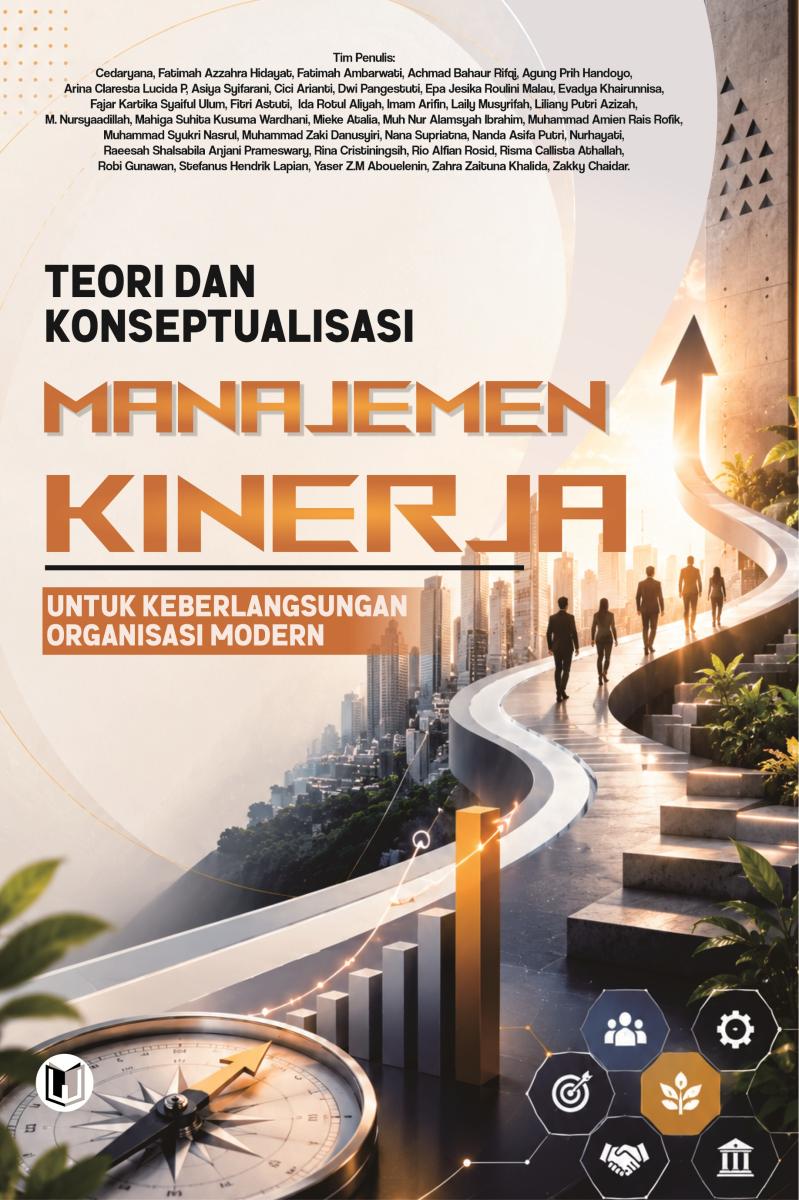
Downloads
Published
July 14, 2026
Copyright (c) 2026 Cedaryana Cedaryana, Laily Musyrifah, Imam Arifin, Fitri Astuti, Fajar Kartika Syaiful Ulum, Evadya Khairunnisa, Epa Jesika Roulini Malau, Dwi Pangestuti, Cici Arianti, Asiya Syifarani, Arina Claresta Lucida P, Agung Prih Handoyo, Achmad Bahaur Rifqi, Fatimah Azzahra Hidayat, Fatimah Ambarwati, Liliany Putri Azizah, M. Nursyaadillah, Mahiga Suhita Kusuma Wardhani, Mieke Atalia, Muh Nur Alamsyah Ibrahim, Muhammad Amien Rais Rofik, Muhammad Syukri Nasrul, Muhammad Zaki Danusyiri, Nana Supriatna, Nanda Asifa Putri, Nurhayati Nurhayati, Rina Cristiningsih, Rio Alfian Rosid, Risma Callista Athallah, Robi Gunawan, Stefanus Hendrik Lapian, Yaser Z. M Abouelenin, Zahra Zaituna Khalida, Zakky Chaidar (Author)
License

This work is licensed under a Creative Commons Attribution-NonCommercial-ShareAlike 4.0 International License.
How to Cite
Cedaryana, C., Musyrifah, L., Arifin, I., Astuti, F., Syaiful Ulum, F. K., Khairunnisa, E., Jesika Roulini Malau, E., Pangestuti, D., Arianti, C., Syifarani, A., Claresta Lucida P, A., Prih Handoyo, A., Bahaur Rifqi, A., Azzahra Hidayat, F., Ambarwati, F., Putri Azizah, L., Nursyaadillah, M., Kusuma Wardhani, M. S., Atalia, M., … Chaidar, Z. (2026). TEORI DAN KONSEPTUALISASI MANAJEMEN KINERJA UNTUK KEBERLANGSUNGAN ORGANISASI MODERN. Widina Media Utama. https://doi.org/10.59818/jrm1pv51