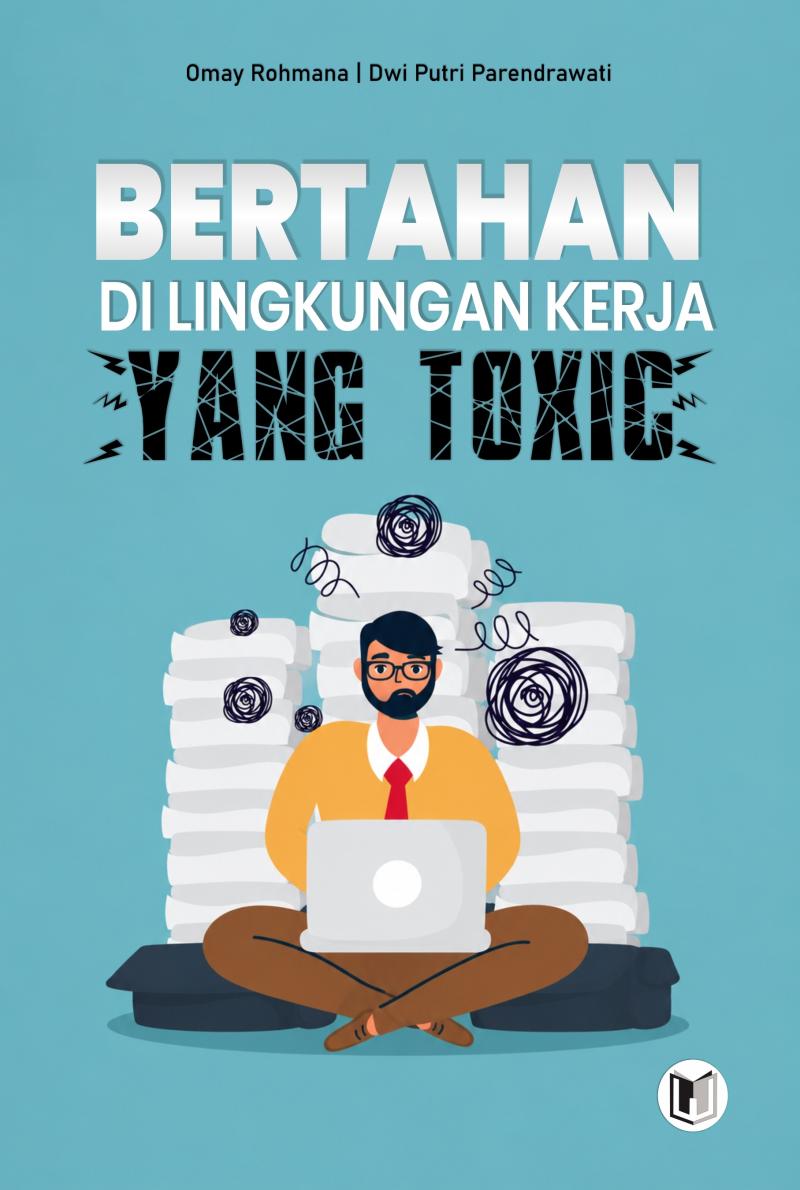
BERTAHAN DI LINGKUNGAN KERJA YANG TOKSIK
Keywords:
SocietySynopsis
Lingkungan kerja ideal seharusnya menjadi tempat bagi individu untuk berkembang, berkolaborasi, dan mencapai tujuan profesional secara sehat. Namun, kenyataannya tidak semua tempat kerja menawarkan suasana yang kondusif. Banyak pekerja menghadapi berbagai bentuk perilaku toxic, seperti komunikasi yang tidak sehat, budaya saling menyalahkan, persaingan yang tidak sportif, intimidasi, diskriminasi, hingga kepemimpinan yang kurang mendukung. Kondisi tersebut tidak hanya memengaruhi produktivitas kerja, tetapi juga berdampak pada kesehatan mental, kesejahteraan emosional, serta kualitas kehidupan secara keseluruhan. Oleh karena itu, diperlukan pemahaman yang tepat mengenai cara menghadapi dan menyikapi lingkungan kerja yang penuh tekanan tanpa kehilangan profesionalisme dan jati diri.
Buku ini hadir sebagai panduan praktis bagi para pekerja, pemimpin, maupun calon profesional yang ingin memahami dinamika lingkungan kerja yang tidak sehat. Buku ini mengupas berbagai karakteristik tempat kerja toxic, tanda-tanda yang perlu diwaspadai, serta faktor-faktor yang menyebabkan budaya kerja negatif berkembang dalam suatu organisasi. Selain itu, pembaca diajak untuk mengenali dampak jangka pendek dan jangka panjang yang dapat muncul apabila kondisi tersebut dibiarkan berlangsung terus-menerus.
Downloads
Download data is not yet available.
References
Bab 1: Pendahuluan
Uraian pada bab ini mencakup studi empiris mengenai ergonomi industri, manajemen risiko K3 (SMK3), dan toksisitas lingkungan fisik sebagai determinan kesehatan kerja makro. Sumber Pustaka yang menjadi bahan penulisan adalah:
Angraini, D., Komala, R., Saftarina, F., Carolia, N., Puspitawati, Z., & Farhan, A. (2023). Edukasi Identifikasi Bahaya Potensial dan Masalah Kesehatan di Lingkungan Kerja pada Industri Pisang Goreng Beku di Kota Bandar Lampung. Jurnal Pengabdian Pada Masyarakat. https://doi.org/10.30653/jppm.v8i4.607
Dewanti, N., Sulistiyani, S., Setyaningsih, Y., & Jayanti, S. (2018). Faktor Risiko Bahaya Tempat Kerja dan Lingkungan Rumah terhadap Kesehatan Home-based Worker di Kota Semarang. Jurnal Kesehatan Lingkungan Indonesia. https://doi.org/10.14710/jkli.17.1.52-58
Elaudy, M. H. (2023). Analisis Penerapan Kebijakan Sistem Manajemen Keselamatan Dan Kesehatan Kerja Dalam Terciptanya Lingkungan Kerja (Studi Kasus Pada Pt. Pln (Persero) Upt Madiun Ultg Kediri). Jimbien: Jurnal Mahasiswa Manajemen, Bisnis, Entrepreneurship. https://doi.org/10.36563/jimbien.v2i2.1185
Fiddien, A., Rahmawati, N., Ronawati, D., & Anggraeni, N. (2023). Edukasi Kesehatan dan Keselamatan Kerja terhadap Risiko Cedera pada Pekerja Lepas Pengangkut Sampah di TPST Mulyoagung Kabupaten Malang. Jurnal ABDIMAS-KU: Jurnal Pengabdian Masyarakat Kedokteran. https://doi.org/10.30659/abdimasku.2.3.128-133
Fikri, E., Dewi, D., & Juariah, L. (2025). Analisis Risiko Kesehatan Lingkungan (ARKL) Pajanan PM2.5 dan PM10 Pada Pekerja PT. Beton Elemenindo Perkasa Tahun 2024. Jurnal Kesehatan Lingkungan Indonesia. https://doi.org/10.14710/jkli.24.1.116-123
Hartono, B., Sulistyaningsih, A., Suherman, S., Daud, A., & Wizraa, I. (2024). Pengaruh Lingkungan Kerja, Kepuasan Kerja dan Pendidikan terhadap Implementasi Sistem Manajemen Mutu di Rumah Sakit Umum Daerah Johar Baru, Jakarta Pusat Tahun 2022. MEDIA KESEHATAN MASYARAKAT INDONESIA. https://doi.org/10.14710/mkmi.23.4.308-312
Kamawati, L., & Sari, D. (2024). Pengaruh Keselamatan Kerja, Kesehatan Kerja dan Lingkungan Kerja terhadap Kinerja Karyawan. J-MAS (Jurnal Manajemen dan Sains). https://doi.org/10.33087/jmas.v9i1.1673
Kusuharto, M., & Nasri, S. (2022). Analisis Faktor Yang Mempengaruhi Tingkat Keparahan Kecelakaan Kerja Sektor Perkebunan Provinsi Lampung Tahun 2018 - 2020. JKM (Jurnal Kesehatan Masyarakat) Cendekia Utama. https://doi.org/10.31596/jkm.v9i2.751
Martini, A., Razak, M., & Asri, A. (2022). Pengaruh kemampuan individu, lingkungan kerja dan motivasi kerja terhadap kepuasan kerja pegawai pada dinas pemberdayaan masyarakat Kabupaten Majene. Nobel Management Review. https://doi.org/10.37476/nmar.v3i1.2913
Mintalangi, S., Kawatu, P. A., & Sekeon, S. A. (2018). Hubungan Antara Persepsi Lingkungan Kerja Dengan Kejadian Kecelakaan Kerja Pada Pekerja Di PT. Tropica Cocoprimadesalelema Kabupaten Minahasa Selatan. Jurnal Kesmas. https://www.academia.edu/download/111923045/294918119.pdf
Bab 2: Stres Kerja Normal vs. Lingkungan Kerja Toksik
Bab ini membedah etiologi stres kerja, mencakup literatur spesifik mengenai beban kerja ekstrem di Asia Timur (Karoshi) serta batasan definitif antara tekanan profesional eustres dan toksisitas sistemik. Sumber Pustaka yang menjadi bahan penulisan adalah:
Adhisty, S., Fauzi, A., Simorangkir, A., Dwiyanti, F., Patricia, H., & Madani, V. (2023). Faktor-Faktor yang Mempengaruhi Kinerja Karyawan: Stress Kerja, Beban Kerja dan Lingkungan Kerja (Literature Review Msdm). Jurnal Manajemen Pendidikan Dan Ilmu Sosial. https://doi.org/10.38035/jmpis.v4i1.1408
Ahmad, N., Diyali, C., & Guite, N. (2025). The Impact Of Work-Related Stress: A Study On Workplace Culture And Mental Health. Lex localis - Journal of Local Self-Government. https://doi.org/10.52152/wqzddv31
Alsereidi, A., Almarzooqi, A., & Amer, S. (2022). Toxic Workplace Environment. Social and Occupational Ergonomics. https://doi.org/10.54941/ahfe1002674
Alsomaidaee, M., Joumaa, B., & Khalid, K. (2023). Toxic Workplace, Mental Health and Employee Well-being, the Moderator Role of Paternalistic Leadership. Journal of Applied Business and Technology. https://doi.org/10.35145/jabt.v4i2.126
Amagasa, T. Nakayama, T. Takahashi, Y. (2025). Karojisatsu in Japan: Characteristics of 22 Cases of Work-Related Suicide. Journal of Occupational Health. https://doi.org/10.1539/joh.47.157
American Psychological Association. (2024). Stress in America: Resilience in the face of systemic stressors. APA Reports.
Budiyanto, B., Rattu, A., & Umboh, J. (2019). Faktor-Faktor Yang Berhubungan Dengan Stres Kerja Perawat Pelaksana Di Ruang Rawat Inap Rumah Sakit Umum Bethesda Gmim Tomohon. Kesmas.
Eisner, D. (2024). Identifying and Eliminating the Toxic Work Environment in the Clinical Setting: A Narrative Review. The Journal of Healthcare Ethics & Administration. https://doi.org/10.22461/jhea.9.7169
Iwasaki, K., Takahashi, M., & Nakata, A. (2006). Health problems due to long working hours in Japan: working hours, workers' compensation (Karoshi), and preventive measures. Industrial Health. https://doi.org/10.2486/indhealth.44.537
Jayadi, R., & Liana, L. (2022). Pengaruh motivasi, lingkungan kerja, dan stres kerja terhadap kinerja karyawan. Fair Value: Jurnal Ilmiah Akuntansi dan Keuangan. https://doi.org/10.32670/fairvalue.v5i2.2323
Bab 3: Psikologi Pelaku dan Korban
Bab ini menganalisis profil psikopatologi pelaku (Dark Tetrad), mekanisme manipulasi gaslighting, serta siklus viktimisasi dalam struktur kekuasaan organisasi. Literatur yang digunakan dalam penulisan bab ini adalah:
Ahmed, A., Atta, M., El-Monshed, A., & Mohamed, A. (2024). The effect of toxic leadership on workplace deviance: the mediating effect of emotional exhaustion. BMC Nursing. https://doi.org/10.1186/s12912-024-02308-x
Anand, P., & Mishra, S. (2021). Corporate gaslighting: A hidden organizational menace. International Journal of Conflict Management. https://doi.org/10.1080/09585192.2019.1570308
Clark, C. (2023). Navigating the challenging complexities of gaslighting in nursing academe. Teaching and Learning in Nursing. https://doi.org/10.1016/j.teln.2023.11.003
Cortina, L., Hershcovis, S., & Clancy, K. (2021). The Embodiment of Insult: A Theory of Biobehavioral Response to Workplace Incivility. Journal of Management. https://doi.org/10.1177/0149206321989798
Cushion, K., & Thompson, N. (2020). The Toxic Organization: Understanding and Managing Personal and Corporate Pathologies. Routledge.
Duffy, M., & Sperry, L. (2012). Mobbing: Causes, Consequences, and Solutions. Oxford University Press.
Duffy, M., & Sperry, L. (2014). Overcoming Mobbing: A Recovery Guide for Targets of Workplace Abuse. Oxford University Press.
Einarsen, S. V., Hoel, H., Zapf, D., & Cooper, C. L. (Eds.). (2020). Bullying and Harassment in the Workplace: Theory, Research and Practice. CRC Press. https://doi.org/10.1201/9780429462528
El-Sayed, A., Alsenany, S., Atta, M., Othman, A., & Asal, M. (2025). Navigating Toxicity: Investigating the Interplay Between Workplace Gaslighting, Workaholism, and Agility Among Nurses. Nursing Inquiry. https://doi.org/10.1111/nin.12697
Frias, R., et al. (2025). Navigating Red Flags: A Phenomenological Exploration of Business Process Outsourcing Employees’ Experiences in the Workplace. Psychology and Education. https://doi.org/10.70838/pemj.340510
Irwin, A., Silver-MacMahon, H., & Wilcke, S. (2022). Consequences and coping: Investigating client, co-worker and senior colleague incivility within veterinary practice. The Veterinary Record. https://doi.org/10.1002/vetr.2030
Kukreja, P., & Pandey, J. (2023). Workplace gaslighting: Conceptualization, development, and validation of a scale. Journal of Business Ethics.
Lipman-Blumen, J. (2005). The Allure of Toxic Leaders: Why We Follow Destructive Prophets and Corrupt Politicians—and How We Can Survive Them. Oxford University Press.
Bab 4: Dampak Negatif terhadap Individu dan Organisasi
Bab ini menyajikan data empiris mengenai epidemi burnout, gangguan kardiovaskular, presenteeism, dan disintegrasi produktivitas akibat paparan toksisitas kronis. Sumber Pustaka yang digunakan untuk penulisan bab ini adalah:
Abramson, A. (2021). The Burnout Epidemic: The Rise of Chronic Stress and How We Can Fix It. Harvard Business Review Press.
Ali, L., Shabeer, S., Fatima, T., Imran, M., & Sarwar, A. (2025). No one heals himself by wounding others! Workplace bullying and presenteeism: the roles of depression, anxiety and toxic leadership. International Journal of Organization Theory & Behavior. https://doi.org/10.1108/ijotb-07-2024-0117
Anasuri, S., & Robinson, K. (2023). Physiological and Psychological Effects of Workplace Bullying on Employees. Journal Of Social Science Research. https://doi.org/10.24297/jssr.v19i.9360
Anjum, A., Ming, X., Siddiqi, A. F., & Rasool, S. F. (2018). An Empirical Study Analyzing Job Productivity in Toxic Workplace Environments. International Journal of Environmental Research and Public Health. https://doi.org/10.3390/ijerph15051035
Balqist, J., Ramdan, A., & Nurmala, R. (2023). Dampak Tekanan Pekerjaan dan Lingkungan Kerja Toxic Terhadap Kinerja Karyawan. PERFORMANCE: Jurnal Bisnis & Akuntansi. https://doi.org/10.24929/feb.v13i2.2608
Blanchard, J., et al. (2022). The perceived work environment and well‐being: A survey of emergency health care workers during the COVID‐19 pandemic. Academic Emergency Medicine. https://doi.org/10.1111/acem.14519
Cheng, F., et al. (2024). Exploring the relationship between adverse working environments and poor psychological states of Chinese workers. Journal of Affective Disorders. https://doi.org/10.1016/j.jad.2024.01.194
Costa, S., Velez, M., & López, A. (2024). Your coworkers can make you sick: An investigation of coworker undermining and employee health. Journal of Occupational and Organizational Psychology. https://doi.org/10.1111/joop.12536
Crișan, I., et al. (2026). Consequences of a toxic workplace environment on psychological safety in anaesthesia and intensive care. European Journal of Anaesthesiology Intensive Care. https://doi.org/10.1097/ea9.0000000000000096
Farrell, R., & Mantler, J. (2024). Examining the Effects of Toxic Work Environments on Young Workers. Carleton Undergraduate Journal of Science. https://doi.org/10.22215/cujs.v3i1.4922
Gaspar, T., et al. (2024). Burnout as a multidimensional phenomenon: How can workplaces be healthy environments?. The European Journal of Public Health. https://doi.org/10.1007/s10389-024-02223-0
George, A. S. (2023). Toxicity in the workplace: The silent killer of careers and lives. Partners Universal International Innovation Journal. https://doi.org/10.5281/zenodo.7852087
Goh, J., Pfeffer, J., & Zenios, S. A. (2015). The Relationship Between Workplace Stressors and Mortality and Health Costs in the United States. Management Science.
Hammen, C. (2018). Risk Factors for Depression: An Autobiographical Review. Annual Review of Clinical Psychology.
Hattab, S., et al. (2022). The effect of toxic leadership on turnover intention and counterproductive work behaviour in Indonesia public organisations. International Journal of Public Sector Management. https://doi.org/10.1108/ijpsm-06-2021-0142
Huang, J., et al. (2023). Mental health status and related factors influencing healthcare workers during the COVID-19 pandemic: A systematic review and meta-analysis. PLOS ONE. https://doi.org/10.1371/journal.pone.0289454
Indra, F., & Rialmi, Z. (2022). Pengaruh Work-Life Balance, Burnout, dan Lingkungan Kerja Terhadap Kepuasan Kerja Karyawan. Jurnal Madani. https://doi.org/10.33753/madani.v5i2.223
Lerner, D., & Henke, R. M. (2008). What does research tell us about depression, job performance, and work productivity?. Journal of Occupational and Environmental Medicine. https://doi.org/10.1097/JOM.0b013e31816bae50
Lomotey, S. (2025). The Impact of Workplace Bullying in Employee Well-Being: Investigating the Effects of Workplace Bullying on Employees Mental Health, Job Satisfaction and Productivity. International Journal of Human Research and Social Science Studies. https://doi.org/10.55677/ijhrsss/01-2025-vol02i9
Maslach, C., & Leiter, M. P. (1997). The truth about burnout: How organizations cause personal stress and what to do about it. Jossey-Bass.
Maslach, C., & Leiter, M. P. (2016). Understanding the burnout experience: recent research and its implications for psychiatry. World Psychiatry.
Maulana, F., & Suwandi, Y. (2024). Pengaruh Lingkungan Kerja dan Burnout terhadap Motivasi serta Implikasinya pada Kinerja Pegawai BAPPEDA Jawa Barat. Jurnal Maps. https://doi.org/10.32627/maps.v7i2.883
Mehmood, S., et al. (2024). Role of workplace bullying and workplace incivility for employee performance: Mediated-moderated mechanism. PLOS ONE. https://doi.org/10.1371/journal.pone.0291877
Bab 5: Mengatasi Lingkungan Kerja yang Toksik
Bab ini memetakan strategi detoksifikasi organisasi melalui pelatihan manajerial lini depan, program intervensi berbasis kepemimpinan etis, dan dekonstruksi norma perilaku menyimpang. Bahasan pada bab ini bersumber dari:
Anjum, A., & Ming, X. (2018). Combating toxic workplace environment. Journal of Modelling in Management. https://doi.org/10.1108/JM2-02-2017-0023
Ceacir, I. (2023). Toxic organizational culture: diagnosis and prevention. Akademos. https://doi.org/10.52673/18570461.23.2-69.13
Dalgaard, V., et al. (2023). A study protocol outlining the development and evaluation of a training program for frontline managers on leading well-being and the psychosocial work environment. BMC Public Health. https://doi.org/10.1186/s12889-023-15728-2
Dickson, R., & Isaiah, O. (2024). Overcoming Toxic Work Environment Through Effective Leadership Strategies. International Journal of Business Management and Economic Review. https://doi.org/10.35409/ijbmer.2024.3559
Hetrick, S. (2023). Toxic Organizational Cultures and Leadership: How to Build and Sustain a Healthy Workplace. Routledge. https://doi.org/10.4324/9781003330387
Irwin, A., et al. (2025). Listen, act and support: An investigation into individual and organisational incivility management in veterinary practice. The Veterinary Record. https://doi.org/10.1002/vetr.4840
Kaluza, A. J., Weber, F., van Dick, R., & Junker, N. M. (2021). Does leadership style matter? A systematic review of destructive and toxic leadership behaviors. Journal of Business Ethics. https://doi.org/10.1111/jasp.12744
Kusy, M., & Holloway, E. (2009). Toxic workplace: Managing toxic personalities and their systems of power. Jossey-Bass.
Bab 6: Komunikasi Terapeutik & Lingkungan Kerja Toksik
Uraian bab ini mengeksplorasi teknik active listening, validasi emosional, serta mitigasi distorsi kognitif seperti efek halo dan bias atribusi dalam interaksi profesional. Literatur tulisan bersumber dari:
Amara, S., Hansen, B., & Torres, J. (2024). Revisiting Therapeutic Communication as an Evidence-Based Intervention to Decrease Violence by Patients Against Staff on Psychiatric Wards. Issues in Mental Health Nursing. https://doi.org/10.1080/01612840.2024.2414744
Andersson, A. (2016). Communication barriers in an interorganizational ERP-project. International Journal of Managing Projects in Business. https://doi.org/10.1108/IJMPB-06-2015-0047
Arnold, E. C., & Boggs, K. U. (2019). Interpersonal Relationships: Professional Communication Skills for Nurses. Elsevier.
Balzer, R. (2020). Therapeutic Communication in the Workplace: Bridging Clinical Skills and Corporate Leadership. Springer.
Beukeboom, C., & Burgers, C. (2019). How Stereotypes Are Shared Through Language: A Review and Introduction of the Social Categories and Stereotypes Communication (SCSC) Framework. Review of Communication Research. https://doi.org/10.12840/issn.2255-4165.017
Bobyreva, E., et al. (2021). Overcoming psychological barriers in discourse interaction in the era of information. SHS Web of Conferences. https://doi.org/10.1051/shsconf/202110901009
Burnard, P. (2017). Training in Counselling Requirements: A Practical Guide for Counsellors and Helping Professionals. Routledge.
DeVito, J. A. (2019). The Interpersonal Communication Book. Pearson Education.
Felts, A. (1992). Organizational Communication. Administration & Society. https://doi.org/10.1177/009539979202300405
Greenberg, J., Pyszczynski, T., & Solomon, S. (1982). The self-serving attributional bias: Beyond self-presentation. Journal of Experimental Social Psychology. https://doi.org/10.1016/0022-1031(82)90081-6
Hankins, K., et al. (2023). Does (mis)communication mitigate the upshot of diversity?. PLOS ONE. https://doi.org/10.1371/journal.pone.0283248
Kamalova, O. (2023). Stereotypes and Stereotyping in Interpersonal and Intergroup Relations. Психология и Психотехника. https://doi.org/10.7256/2454-0722.2023.1.40027
Karlsen, E., & Nazar, M. (2024). How cultural diversity affects communication and collaboration within global high-performance project teams?. Procedia Computer Science. https://doi.org/10.1016/j.procs.2024.06.197
Karna, W., et al. (2024). Strategies for Managing Interpersonal Conflicts in Multicultural Teams. KMAN Counseling and Psychology Nexus. https://doi.org/10.61838/kman.psychnexus.2.1.13
Koch, S., et al. (2024). Integrating stereotypes and factual evidence in interpersonal communication. NPJ Science of Learning. https://doi.org/10.1038/s41539-024-00262-6
Laham, S., & Forgas, J. (2022). Halo effects. Cognitive Illusions. https://doi.org/10.4324/9781003154730-19
McCabe, C., & Timmins, F. (2013). Communication skills for nursing practice. Bloomsbury Publishing.
Mersha, A., et al. (2023). Therapeutic communication and its associated factors among nurses working in public hospitals... BMC Nursing. https://doi.org/10.1186/s12912-023-01526-z
Mezulis, A., et al. (2004). Is there a universal positivity bias in attributions? A meta-analytic review of individual, developmental, and cultural differences in the self-serving attributional bias. Psychological Bulletin. https://doi.org/10.1037/0033-2909.130.5.711
Miller, D., & Ross, M. (1975). Self-serving biases in the attribution of causality: Fact or fiction?. Psychological Bulletin. https://doi.org/10.1037/h0076486
Bab 7: Strategi Bertahan di Lingkungan Kerja yang Toksik
Bab ini memfokuskan pada upaya penguatan resiliensi personal, mekanisme koping task-oriented, serta peran dukungan sosial sebagai penyangga (buffer) terhadap perilaku kasar pimpinan. Sumber Pustaka yang menjadi bahan tulisan adalah:
Al-Hawari, M., Bani‐Melhem, S., & Quratulain, S. (2020). Do Frontline Employees Cope Effectively with Abusive Supervision and Customer Incivility? Testing the Effect of Employee Resilience. Journal of Business and Psychology. https://doi.org/10.1007/s10869-019-09621-2
Arshad, A., Sun, P., & Desmarais, F. (2021). Abusive Supervision and Employee Empowerment: The Moderating Role of Resilience and Workplace Friendship. Journal of Leadership & Organizational Studies. https://doi.org/10.1177/15480518211005449
Bani‐Melhem, S., Quratulain, S., & Al-Hawari, M. (2021). Does employee resilience exacerbate the effects of abusive supervision? A study of frontline employees’ self-esteem, turnover intention, and innovative behaviors. Journal of Hospitality Marketing & Management. https://doi.org/10.1080/19368623.2021.1860850
Bhandarker, A., & Rai, S. (2019). Toxic leadership: emotional distress and coping strategy. International Journal of Organization Theory & Behavior. https://doi.org/10.1108/ijotb-03-2018-0027
Britt, T., et al. (2016). Effective and ineffective coping strategies in a low-autonomy work environment. Journal of Occupational Health Psychology. https://doi.org/10.1037/a0039898
Demerouti, E., Bakker, A. B., & Xanthopoulou, D. (2019). Job Demands-Resources theory and the role of individual cognitive and behavioral strategies. Occupational Health Psychology Perspective.
Fida, R., Laschinger, H., & Leiter, M. (2016). The protective role of self-efficacy against workplace incivility and burnout in nursing. Health Care Management Review. https://doi.org/10.1097/hmr.0000000000000126
Finstad, G., et al. (2021). Resilience, Coping Strategies and Posttraumatic Growth in the Workplace Following COVID-19. International Journal of Environmental Research and Public Health. https://doi.org/10.3390/ijerph18189453
García-Izquierdo, M., et al. (2025). Resilience as a Mediator Between Workplace Violence and Psychological Well-Being in Hospital Nurses. Nursing Reports. https://doi.org/10.3390/nursrep15070234
Geldart, S., et al. (2018). Workplace incivility, psychological distress, and the protective effect of co-worker support. International Journal of Workplace Health Management. https://doi.org/10.1108/ijwhm-07-2017-0051
Hashemi, B., & Shrivastava, A. (2024). Impact of workplace incivility on choice of coping strategies: A mixed method study. Journal of Workplace Behavioral Health. https://doi.org/10.1080/15555240.2024.2337942
He, Y., et al. (2020). Explaining the Negative Impact of Workplace Incivility on Work and Non-work Outcomes: The Roles of Negative Rumination and Organizational Support. Stress and Health. https://doi.org/10.1002/smi.2988
Hershcovis, M., et al. (2017). The Effects of Confrontation and Avoidance Coping in Response to Workplace Incivility. Journal of Occupational Health Psychology. https://doi.org/10.1037/ocp0000078
Holm, K., Torkelson, E., & Bäckström, M. (2023). Coping with workplace incivility in the foodservice industry. Journal of Human Resources in Hospitality & Tourism. https://doi.org/10.1080/15332845.2023.2180964
Jackson, D., Firtko, A., & Edenborough, M. (2007). Personal resilience as a strategy for surviving and thriving in the face of workplace adversity. Journal of Advanced Nursing. https://doi.org/10.1111/j.1365-2648.2007.04412.x
Koval, V., & Pidluzhna, S. (2025). Mental Resilience Of Employees In Hazardous Work Conditions: Psychoemotional Challenges And Support Strategies. Public Administration and Law Review. https://doi.org/10.36690/2674-5216-2025-1-122-135
Kuriakose, V., & Sreejesh, S. (2023). Co-worker and customer incivility on employee well-being: Roles of helplessness, social support at work and psychological detachment. Journal of Hospitality and Tourism Management. https://doi.org/10.1016/j.jhtm.2023.07.009
Kuriakose, V., Paul, M., & Bishwas, S. (2022). Examining the pathway linking workplace incivility and employee well-being: a study among frontline hotel employees in India. International Journal of Contemporary Hospitality Management. https://doi.org/10.1108/ijchm-01-2022-0142
Lancaster, L. C., & Stillman, D. (2010). The M-Factor: How the Millennial Generation Is Shaking Up the Workplace. Harper Business.
Linvill, J., & Connaughton, S. (2018). Coping with Workplace Incivility. The Routledge Handbook of Communication and Bullying. https://doi.org/10.4324/9781315148113-13
Maresca, G., et al. (2022). Coping Strategies of Healthcare Professionals with Burnout Syndrome: A Systematic Review. Medicina. https://doi.org/10.3390/medicina58020327
Mawritz, M., Dust, S., & Resick, C. (2014). Hostile climate, abusive supervision, and employee coping: does conscientiousness matter? The Journal of Applied Psychology. https://doi.org/10.1037/a0035863
Bab 8: Peran Organisasi Dalam Lingkungan Kerja Toksik
Literatur bab ini mengeksplorasi infrastruktur organisasional, redefinisi budaya DEI, peran audit SDM, serta mitigasi perilaku gatekeeping dan penimbunan kekuasaan (power hoarding). Sumber tulisan berasalah dari sumber Pustaka:
Amoadu, M., Ansah, E., & Sarfo, J. (2024). Preventing workplace mistreatment and improving workers’ mental health: a scoping review of the impact of psychosocial safety climate. BMC Psychology. https://doi.org/10.1186/s40359-024-01675-z
Boushey, H. (2019). Finding time: The economics of work-life conflict. Harvard University Press.
Cushman, A. (2021). The Gatekeeper: Power, Control, and the Ethics of Access.
Field, E., et al. (2023). Women in the workplace 2023. McKinsey & Company.
Garton, E., & Mankins, M. (2017). Time, talent, energy: Overcome organizational bureaucracy and unleash your team’s productive power. Harvard Business Review Press.
Hofmann, D. A., & Burke, M. J. (2024). The Science of Workplace Health and Safety: A Guide for Practitioners and Organizations. American Psychological Association.
Sull, D., et al. (2022). Why every leader needs to worry about toxic culture. MIT Sloan Management Review.
Bab 9: Membangun Budaya Kerja yang Sehat
Bab ini berfokus pada pembahasan kerangka kerja Psychological Safety, model kepemimpinan melayani (Servant Leadership), serta pergeseran pemberian penghargaan atau sanksi dari paradigma retributif ke keadilan restoratif. Sumber Pustaka yang menjadi bahan penulisan adalah:
Ahmed, F., Zhao, F., Faraz, N., & Qin, Y. (2020). How inclusive leadership paves way for psychological well‐being of employees during trauma and crisis. Journal of Advanced Nursing. https://doi.org/10.1111/jan.14637
Andleeb, N., et al. (2026). Exploring human resource capabilities and organizational culture for sustainable competitive advantage. Competitiveness Review. https://doi.org/10.1108/CR-06-2025-0184
Baker, M., & Kim, K. (2020). Dealing with customer incivility: The effects of managerial support on employee psychological well-being and quality-of-life. International Journal of Hospitality Management. https://doi.org/10.1016/j.ijhm.2020.102503
Clark, T. R. (2020). The 4 Stages of Psychological Safety: Defining the Path to Inclusion and Innovation. Berrett-Koehler Publishers.
Clarke, E., et al. (2024). Feeling safe to speak up: Leaders improving employee wellbeing through psychological safety. Economic and Industrial Democracy. https://doi.org/10.1177/0143831x231226303
Coyle, D. (2018). The Culture Code: The Secrets of Highly Successful Groups. Bantam.
Edmondson, A. C. (2018). The Fearless Organization: Creating Psychological Safety in the Workplace for Learning, Innovation, and Growth. John Wiley & Sons.
Edmondson, A. C. (2023). Right Kind of Wrong: The Science of Failing Well. Simon and Schuster.
Edmondson, A. C., & Mortensen, M. (2021). What Psychological Safety Looks Like in a Hybrid Workplace. Harvard Business Review.
Frazier, M. L., et al. (2017). Psychological safety: A meta‐analytic review and extension. Personnel Psychology. https://doi.org/10.1111/peps.12183
Haque, M., & Lissillour, R. (2025). Buffering the blaze: emotional intelligence as a moderator between abusive supervision and employees’ mental well-being. Journal of Management Development. https://doi.org/10.1108/jmd-12-2024-0421
Ip, E., et al. (2025). Antecedents of Workplace Psychological Safety in Public Safety and Frontline Healthcare: A Scoping Review. International Journal of Environmental Research and Public Health. https://doi.org/10.3390/ijerph22060820
Kyambade, M., et al. (2024). Servant leadership and healthy work relationships in university context... Cogent Education. https://doi.org/10.1080/2331186x.2024.2418802
Lencioni, P. (2002). The Five Dysfunctions of a Team: A Leadership Fable. Jossey-Bass.
Lencioni, P. (2005). Overcoming the Five Dysfunctions of a Team: A Field Guide. Jossey-Bass.
Bab 10: Merawat yang Tersisa, Membangun yang Baru
Bab ini merupakan akhir dari tulisan yang bersifat transformatif, memberikan panduan filosofis mengenai kecerdasan emosional dan pertumbuhan pasca-trauma (Post-Traumatic Growth). Sumber Pustaka yang menjadi bahan penulisan adalah:
Brown, B. (2018). Dare to Lead: Brave Work. Tough Conversations. Whole Hearts. Random House.
Goleman, D. (2015). Emotional Intelligence: Why It Can Matter More Than IQ. Bantam Books.
Grant, A. (2013). Give and take: A revolutionary approach to success. Penguin.
Grant, A. (2021). Think Again: The Power of Knowing What You Don't Know. Viking.
Kets de Vries, M. F. R. (2006). The Leader on the Couch: A Clinical Approach to Changing People and Organizations. Jossey-Bass.
Kushel, G. (1994). Reaching Your Full Potential: The Power of Self-Management. AMACOM.
Lazarus, R. S., & Folkman, S. (2023). Transactional theory of stress and coping: Contemporary applications in psychology. Journal of Clinical Psychology.
Downloads
Published
June 22, 2026
Copyright (c) 2026 Omay Rohmana, Parendrawati (Author)
License

This work is licensed under a Creative Commons Attribution-NonCommercial-ShareAlike 4.0 International License.
How to Cite
Rohmana, O., & Putri, D. (2026). BERTAHAN DI LINGKUNGAN KERJA YANG TOKSIK. Widina Media Utama. https://doi.org/10.59818/9bqfc233