
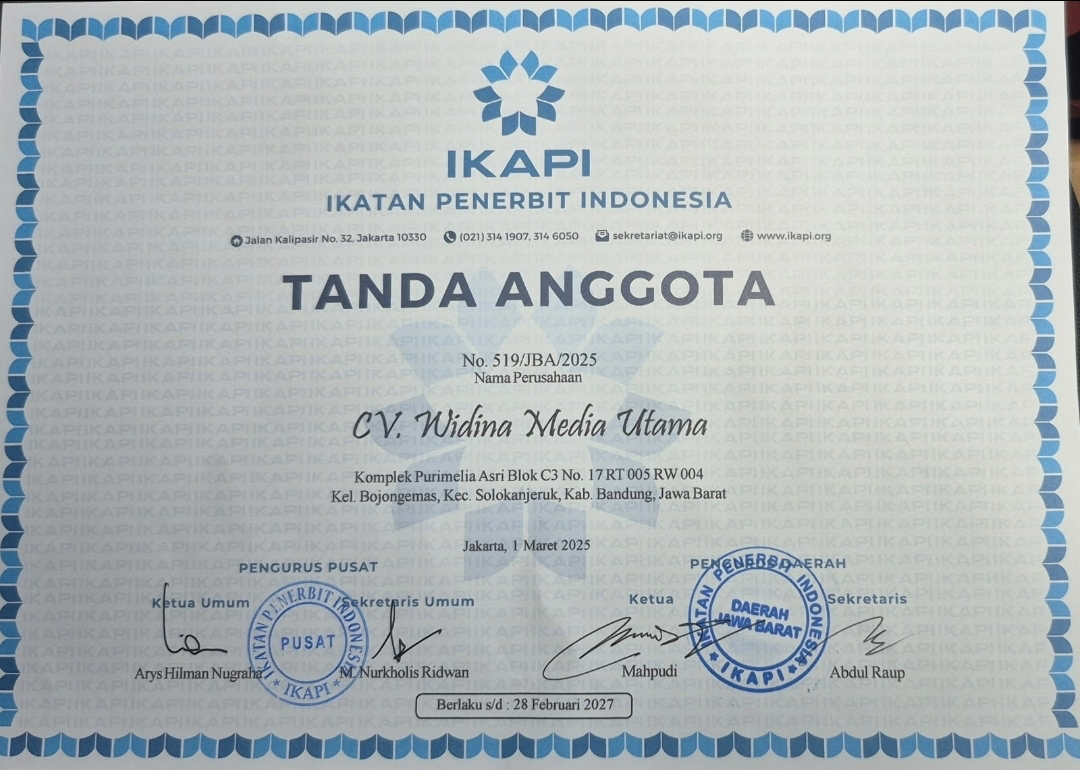
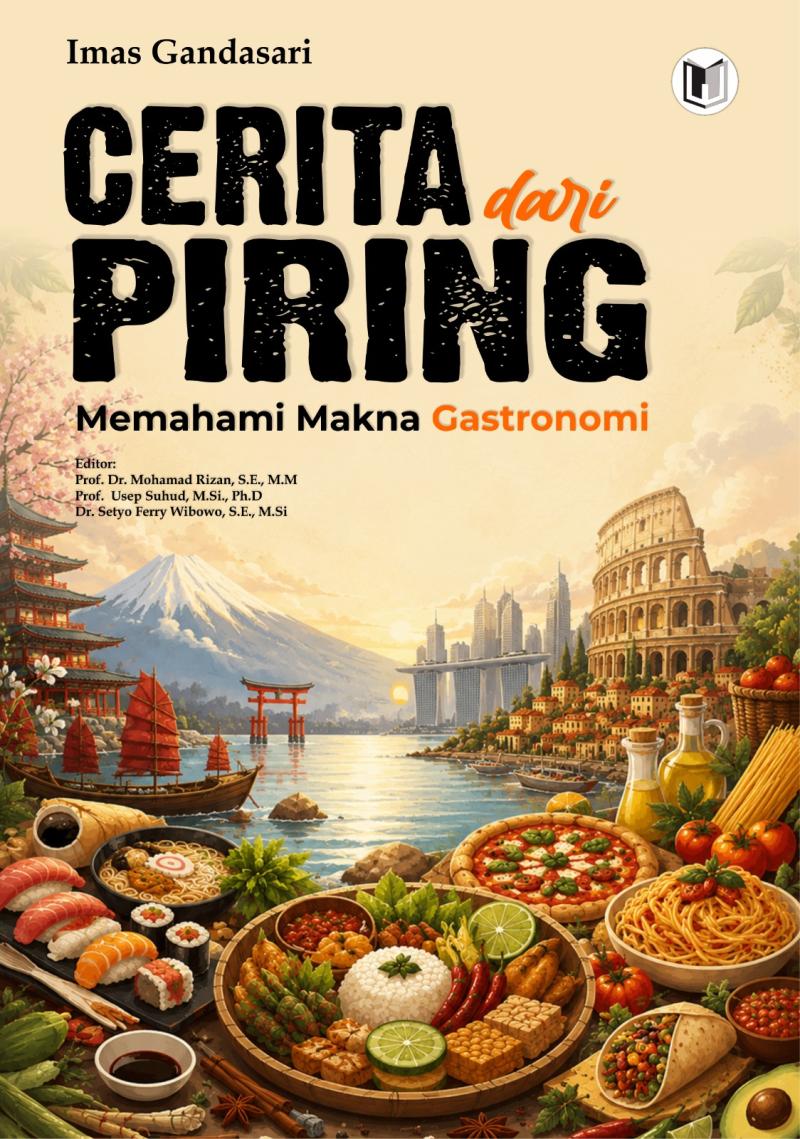
CERITA DARI PIRING: MEMAHAMI MAKNA GASTRONOMI
Keywords:
Cerita, GastronomiSynopsis
Cerita dari Piring: Memahami Makna Gastronomi mengajak pembaca menjelajahi dunia melalui kisah Raka, seorang anak yang mulai menyadari bahwa setiap makanan memiliki cerita panjang di balik kelezatannya. Berawal dari pertanyaan sederhana tentang asal-usul makanan di meja makan, Raka memulai petualangan yang membawanya mengenal hubungan erat antara makanan, sejarah, budaya, tradisi, lingkungan, dan kehidupan masyarakat. Dengan alur cerita yang ringan dan menarik, buku ini memperkenalkan konsep gastronomi sebagai cara memahami dunia melalui pengalaman kuliner.
Melalui perjalanan ke berbagai negara seperti Italia, Jepang, Singapura, Meksiko, hingga kembali ke Indonesia, pembaca diajak mengenal kekayaan warisan kuliner dunia beserta nilai-nilai yang terkandung di dalamnya. Setiap kisah tidak hanya menghadirkan pengalaman menikmati makanan khas, tetapi juga memperlihatkan peran petani, nelayan, pedagang, koki, serta masyarakat yang menjaga tradisi agar tetap hidup dari generasi ke generasi. Disertai penjelasan ilmiah yang dikemas secara sederhana, buku ini menjadi sarana edukatif untuk memahami wisata gastronomi, keberagaman budaya, dan pentingnya pelestarian warisan kuliner.
Buku ini sangat cocok dibaca oleh pelajar, mahasiswa, pendidik, maupun masyarakat umum yang ingin mengenal gastronomi dengan cara yang menyenangkan dan mudah dipahami. Cerita dari Piring: Memahami Makna Gastronomi tidak hanya mengajarkan pentingnya menghargai makanan, tetapi juga menumbuhkan kepedulian terhadap budaya, lingkungan, dan identitas bangsa. Pada akhirnya, pembaca akan menyadari bahwa setiap hidangan yang tersaji di atas piring bukan sekadar makanan, melainkan sebuah kisah tentang manusia, alam, dan peradaban yang layak untuk dipelajari dan diwariskan.
Downloads
Download data is not yet available.
References
Aguilera, J. M., Kim, B.-K., & Park, D. J. (2019). Particular Alimentations for Nutrition , Health and Pleasure. Advances in Food and Nutrition Research. https://doi.org/https://doi.org/10.1016/bs.afnr.2018.07.005
Arelis, L., Quispe, M., & David, R. (2025). Traditional gastronomy as factor in the experience of heritage culture : The experience of visiting the Royal Tombs of Sipan Museum of Lambayeque ( Perú ). International Journal of Gastronomy and Food Science, 40(February). https://doi.org/10.1016/j.ijgfs.2025.101144
Assmann, S. (2025). Culinary heritage in Asia : National and regional identities – Reflections from the field. Routledge Open Research, 3(6), 1–20. https://doi.org/https://doi.org/10.12688/routledgeopenres.18143.1
Bestor, B. T. C., & Bestor, V. L. (2011). Cuisine and Identity in Contemporary Japan. Food, Culture, and Asia, 16(3), 13–18.
Buenano-Allauca, M., Qasim, D., Guevara-Aroca, F., & Lopez-Egas, P. (2026). International Journal of Gastronomy and Food Science Traditional gastronomy as a tourist attraction in an emerging cultural destination : The case of Otavalo. International Journal of Gastronomy and Food Science, 43(September 2025). https://doi.org/10.1016/j.ijgfs.2026.101424
Cahya, S. B., Subroto, W. T., & Sakti, N. C. (2025). The Role of Traditional Markets in Improving the Economy of the Community in Indonesia. International Journal of Economics, Commerce, and Management, 2(1). https://doi.org/https://doi.org/10.62951/ijecm.v1i4.432
Debbarma, A. (2025). Traditional Food as an Archive of History and Culture. Unnati International Journal of Multidisciplinary Scientific Research, 6(12), 20–23.
Dordai, L., Becze, A., & Roman, M. (2026). Gastronomic Tourism : Global Trends , Sustainability Challenges , and Research Directions ( 2010 – 2025 )— A Comprehensive Review. Gastronomy, 4(4). https://doi.org/https://doi.org/10.3390/gastronomy4010004
Eck, T., Zielinski, S., & Ahn, Y. (2026). Authenticity , Restaurant Quality , and Place Attachment : Evaluating Authentic Food Tourism Experiences. Sustainability, 18(4), 1–23.
Ellis, A. (2018). What is food tourism ? Tourism Management, 68(October), 1–8. https://doi.org/https://doi.org/10.1016/j.tourman.2018.03.025
Ericksen, P. J. (2008). Conceptualizing food systems for global environmental change research. Global Environmental Change, 18(1), 234–245. https://doi.org/https://doi.org/10.1016/j.gloenvcha.2007.09.002
Fusté-Forné, F., … A. O.-G.-: T. J. of the, & 2023, undefined. (2023). Gastronomy in tourism management and marketing: an interview with ChatGPT. Journal.Robonomics.Science, 1–13. https://www.journal.robonomics.science/index.php/rj/article/view/42
Henderson, J. C. (2012). Hawker centres as tourist attractions : The case of Singapore. International Journal of Hospitality Management, 31(3), 1–6. https://doi.org/https://doi.org/10.1016/j.ijhm.2011.10.002
Kim, B., Lee, D. C. H., Chua, B. L., & Han, H. (2022). Country image of gastronomy and branding Hawker Culture : Local consumers ’ perception. Tourism Management Perspectives, 44(October), 1–11. https://doi.org/10.1016/j.tmp.2022.101036
Kim, S., Park, E., & Lamb, D. (2019). Extraordinary or ordinary ? Food tourism motivations of Japanese domestic noodle tourists. Tourism Management Perspectives, 29(January), 1–10. https://doi.org/10.1016/j.tmp.2019.01.001
Kristia, K., Kovács, S., & Erdey, L. (2024). Generation Z ’ s appetite for traditional food : unveiling the interplay of sustainability values as higher order construct and food influencers in Indonesia. Discover Sustainability, 5(493). https://doi.org/10.1007/s43621-024-00714-4
Lin, Q., & Selim, G. (2026). Cross examination of gastronomy tourism and urban regeneration : An integrated review. Cities, 173(December), 106958. https://doi.org/10.1016/j.cities.2026.106958
MAFF. (2023). Washoku: Traditional Dietary Cultures of the Japanese.
Mariscal-Moreno, R. M., Sánchez, K. R., & Cárdenas, J. de D. F. (2022). Nixtamalization process affect maize tortillas storage quality. International Journal of Gastronomy and Food Science, 30(December), 1–7. https://doi.org/https://doi.org/10.1016/j.ijgfs.2022.100604
Matta, R. (2019). Explorations in the History and Culture of Human Nourishment Mexico ’ s ethnic culinary heritage and cocineras tradicionales ( traditional female cooks ). Food and Foodways, 0(0), 1–21. https://doi.org/10.1080/07409710.2019.1646481
Mau, D. P., Mau, Y. P., Wibowo, O. H., Kurniansah, R., & Arta, I. W. (2024). Pelestarian Wisata Kuliner Lokal dalam Meningkatkan Perekonomian Masyarakat Surabaya. Greenomika, 06(2), 123–134. https://doi.org/10.55732/unu.gnk.2024.06.2.3
Musubi, T. (2023, June 12). Japanese Food Culture and the Seasons. Musubi Kiln, 1–6. https://musubikiln.com/blogs/journal/japanese-food-culture-and-seasonalities?srsltid=AfmBOoqRazrFMhBFOScdzMHKyWljpEkJjAV362-SLyIbbXUAdy9LkDls
Nadra, N. M., Sumawidari, I. A. K., Damayanti, I. A. K. W., & Arjana, I. W. B. (2025). Traditional cuisine as a social symbol: A socio-cultural analysis of the collective identity of Indonesian society. Journal of Commerce Management and Tourism Studies, 4(3), 460–473. https://doi.org/https://doi.org/10.58881/jcmts.v3i2
Najla, A., Adibah, N., Fitria, R., Yan, A., Husna, N., Salsabila, Z. N., Aulia, S., & Fauziyah, N. (2025). Nasionalisme Melalui Pelestarian Makanan Tradisional Indonesia. Jurnal Pendidikan Non Formal, 3(2), 1–8. https://doi.org/https://doi.org/10.47134/jpn.v3i2.2287 Correspondence:
Nugroho, S. P., Susilowati, H., & Istiraharsi, Y. (2023). Wisata Gastronomi Makanan Tradisional Yogyakarta Melalui Storynomic. Media Wisata, 21(2), 340–359. https://doi.org/10.36276/mws.v21i2.524
Nuraisyah, R., Ramadhan, A., & Sembiring, R. (2025). The Role of Traditional Markets in Improving the Economy of the Muliorejo Village Community , Deli Serdang Regency. Journal of Economics and Social Sciences, 4(1), 305–314. https://doi.org/10.59525/jess.v4i1.765
Okumus, B. (2024). Will the decrease in food availability affect food tourism? A historical and contemporary perspective: horizon 2050 article. Tourism Review, November. https://doi.org/10.1108/TR-03-2024-0174
Ossowska, L., Janiszewska, D., Kwiatkowski, G., & Oklevik, O. (2024). Local Food Production Based on Culinary Heritage — A Way to Local Sustainability. Sustainability, 16(24), 1–18. https://doi.org/https://doi.org/10.3390/su162411310
Partarakis, N., Kaplanidi, D., Doulgeraki, P., Karuzaki, E., Petraki, A., Metilli, D., Bartalesi, V., Adami, I., Meghini, C., & Zabulis, X. (2021). Representation and Presentation of Culinary Tradition as Cultural Heritage. Heritage, 4(2), 612–640. https://doi.org/https://doi.org/10.3390/heritage4020036
Pérez Gálvez, J. C., López-Guzmán, T., Cordova Buiza, F., & Medina-Viruel, M. J. (2017). Gastronomy as an element of attraction in a tourist destination: the case of Lima, Peru. Journal of Ethnic Foods, 4(4), 254–261. https://doi.org/10.1016/j.jef.2017.11.002
Preetha, A. T., & Lazarus, A. D. (2024). Culinary Authenticity and Diaspora : A Preliminary Enquiry. Studies in Media and Communication, 12(3), 50–62. https://doi.org/10.11114/smc.v12i3.6874
Radomskaya, V., & Bhati, A. S. (2022). Hawker Centres : A Social Space Approach to Promoting Community Wellbeing. Urban Planning, 7(4), 1–12. https://doi.org/https://doi.org/10.17645/up.v7i4.5658 Article
Rahman, F. (2016). Jejak rasa nusantara : sejarah makanan Indonesia. PT Gramedia Pustaka Utama.
Reddy, G., & Dam, R. M. Van. (2020). Food , culture , and identity in multicultural societies : Insights from Singapore. Appetite, 149(February), 104633. https://doi.org/10.1016/j.appet.2020.104633
Ruiz, R. V. P., Toalá, J. E. A., Monterrosa, R. G. C., Amor, A. A. R., Rodríguez, M. H., Villasana, Y. C., & Herrera, P. J. (2024). Mexican native maize : Origin , races and impact on food and gastronomy. International Journal of Gastronomy and Food Science, 37(September), 1–13.
Seyitoğlu, F., & Ivanov, S. (2020). A conceptual study of the strategic role of gastronomy in tourism destinations. International Journal of Gastronomy and Food Science, 21(March). https://doi.org/10.1016/j.ijgfs.2020.100230
Siregar, A. A. (2024). Historical Trace of The Spice Road as An Economic Center Indonesian Trade And Cultural Heritage. Jurnal Pamator, 17(4), 667–674. https://doi.org/https://doi.org/10.21107/pamator.v17i4.28772 Manuscript
Staller, J. E. (2020). Maize in Andean Food and Culture : Interdisciplinary Approaches. In The Latin American Studies Book Series (pp. 283–310). Springer International Publishing. https://doi.org/https://doi.org/10.1007/978-3-030-51629-1_11
Sthapit, E., Björk, P., Coudounaris, D. N., & Jiménez-barreto, J. (2024). Memorable Halal Tourism Experience and Its Effects on Place Attachment Memorable Halal Tourism Experience and Its Effects on Place Attachment. International Journal of Hospitality & Tourism Administration, 25(3), 575–601. https://doi.org/10.1080/15256480.2022.2135666
Stone, M. J., Migacz, S., & Wolf, E. (2019). Beyond the journey : the lasting impact of culinary tourism activities. Current Issues in Tourism, 22, 147–153. https://doi.org/10.1080/13683500.2018.1427705
Su, L., Ye, C., & Huang, Y. (2024). Does destination nostalgic advertising enhance tourists’ intentions to visit? The moderating role of destination type. Tourism Management, 100(November 2022), 104810. https://doi.org/10.1016/j.tourman.2023.104810
Suresh, M., & Chaudhary, P. (2025). Unveiling the Food Heritage : Traditional Food Systems and Transitions in Malamuthan Community. International Journal of Environmental Sciences, 11(6), 1393–1402.
Thio, S., Kristanti, M., & Sondak, M. R. (2024). The role of food consumption value and attitude toward food on behavioral intention : Culinary tourist behavior in Indonesia. Cogent Business & Management, 11(1). https://doi.org/10.1080/23311975.2024.2371985
Tutwiler, M. A., Bailey, A., Attwood, S., Remans, R., & Ramirez, M. (2017). Agricultural biodiversity and food system sustainability.
UNEP. (2024). UNEP Food Waste Index Report 2024.
UNESCO. (2017). Art of Neapolitan Pizzaiuolo. Intergovernmental Committee for the Safeguarding of the Intangible Cultural Heritage. UNESCO Intangible Cultural Heritage. https://ich.unesco.org/en/RL/art-of-neapolitan-pizzaiuolo-00722
UNESCO. (2020). Hawker culture in Singapore, community dining and culinary practices in a multicultural urban context. UNESCO Intangible Cultural Heritage. https://ich.unesco.org/en/RL/hawker-culture-in-singapore-community-dining-and-culinary-practices-in-a-multicultural-urban-context-01568
Unicef. (2023). The State Food Security and Nutrition in the World 2023: Unranization, Agrifood System Transformation and Health Diet Across The Rural-Urban continum. https://doi.org/https://doi.org/10.4060/cc3
Vijulie, I., Vânău, G., Preda, M., & Talos, A. M. (2025). The Role of Food Markets in Urban Sustainable Tourism : A Case Study from Bucharest ( Romania ). Sustainability17, 17(13). https://doi.org/https://doi.org/10.3390/su17136217
World Tourism Organization. (2021). 6Th World Forum on Gastronomy Tourism. https://www.unwto.org/6th-unwto-world-forum-on-gastronomy-tourism
Yeoman, I., & Mcmahon-beatte, U. (2016). The future of food tourism. Journal of Tourism Futures, 2(1). https://doi.org/10.1108/JTF-12-2015-0051
Zhang, S., & Lo, Y. H. (2024). Tourists’ perceived destination image and heritage conservation intention: a comparative study of heritage and film-induced images. International Journal of Tourism Cities, 10(2), 469–490. https://doi.org/10.1108/IJTC-04-2022-0093
Downloads
Published
July 25, 2026
Copyright (c) 2026 Imas Gandasari (Author)
License

This work is licensed under a Creative Commons Attribution-NonCommercial-ShareAlike 4.0 International License.
How to Cite
Gandasari, I. (2026). CERITA DARI PIRING: MEMAHAMI MAKNA GASTRONOMI. Widina Media Utama. https://doi.org/10.59818/cjt2v662