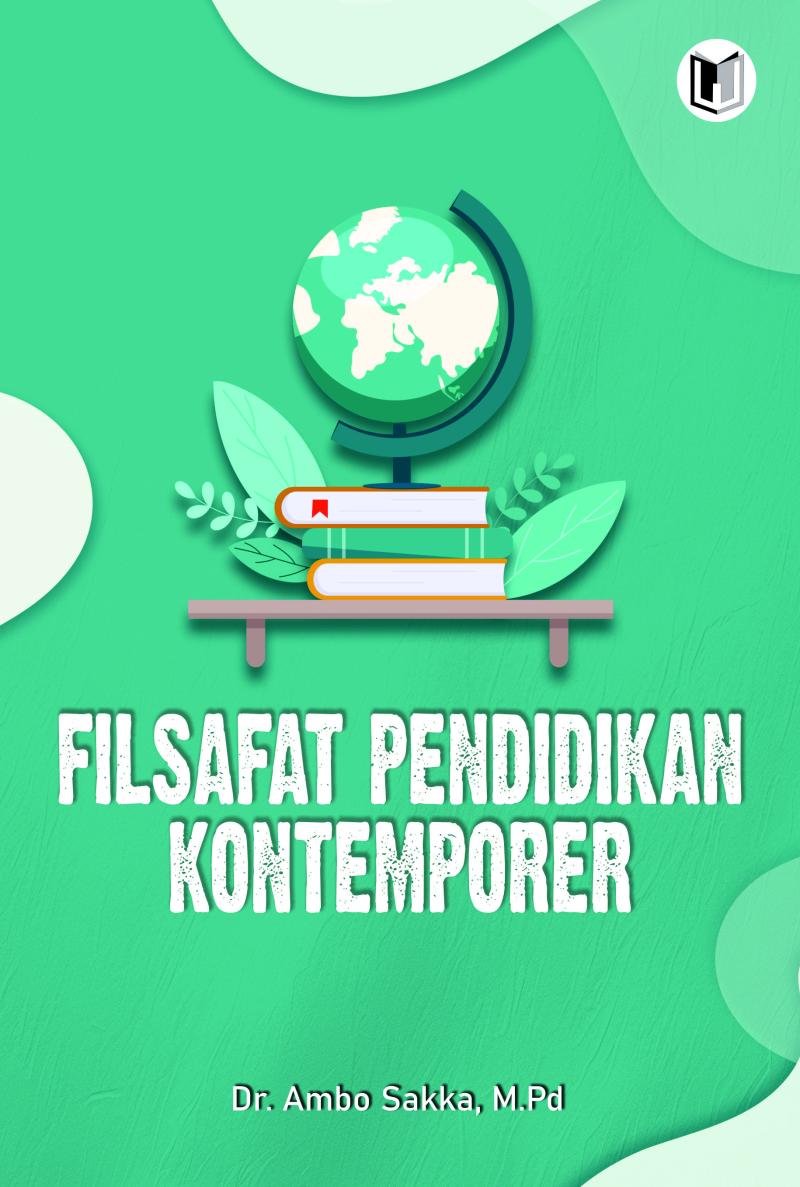
FILSAFAT PENDIDIKAN KONTEMPORER
Keywords:
Filsafat Pendidikan Kontemporer (Contemporary Philosophy of Education), Ilmu Pengetahuan (Science), Sarana Berpikir Ilmiah (Scientific Thinking Tools), Praktik Pendidikan (Educational Practice), Pendidikan Berbasis Kompetensi (Competency-Based Education), Pendidikan Nilai (Values Education), Filsafat Ilmu (Philosophy of Science)Synopsis
Pendidikan selalu mengalami perkembangan mengikuti dinamika kehidupan masyarakat. Perubahan ilmu pengetahuan, kemajuan teknologi, serta berbagai persoalan sosial menghadirkan tantangan baru yang menuntut pemahaman lebih mendalam mengenai hakikat pendidikan, tujuan pembelajaran, dan peran manusia dalam membangun peradaban. Filsafat pendidikan memberikan landasan berpikir untuk memahami perubahan tersebut secara rasional, kritis, dan berorientasi pada nilai-nilai kemanusiaan. Filsafat Pendidikan Kontemporer membahas berbagai pokok pemikiran yang menjadi dasar pengembangan ilmu pendidikan sekaligus menghubungkannya dengan persoalan-persoalan pendidikan masa kini. Pembaca akan menemukan pembahasan mengenai filsafat ilmu, sarana berpikir ilmiah, logika, bahasa, matematika, dan statistika sebagai fondasi pengembangan ilmu pengetahuan.
Buku ini juga mengulas berbagai tema yang berkaitan dengan praktik pendidikan, meliputi evaluasi pendidikan, pendidikan nilai, psikologi remaja, pendidikan berbasis kompetensi, pendidikan anak usia dini, homeschooling, pendidikan keguruan, serta berbagai isu yang berkembang dalam dunia pendidikan. Seluruh pembahasan disusun secara runtut sehingga memberikan gambaran yang utuh mengenai hubungan antara pemikiran filosofis dan praktik pendidikan.
Buku ini hadir sebagai sarana membantu pembaca memahami bahwa pendidikan bukan sekadar proses penyampaian pengetahuan, melainkan ikhtiar membentuk manusia yang memiliki kemampuan berpikir, bersikap, dan bertindak secara bijaksana. Pemahaman terhadap filsafat pendidikan diharapkan dapat memperluas cara pandang dalam menyikapi berbagai persoalan pendidikan sekaligus menjadi dasar dalam mengembangkan pembelajaran yang lebih bermakna. Serta mendorong lahirnya praktik pendidikan yang berpijak pada nilai, etika, dan tanggung jawab dalam membangun kehidupan yang lebih baik.
Downloads
Download data is not yet available.
References
Arendt, H. (1961). The crisis in education. In H. Arendt, Between Past and Future: Six Exercises in Political Thought (pp. 173–196). Viking Press.
Barber, M., & Mourshed, M. (2007). How the World's Best-Performing School Systems Come Out on Top. McKinsey & Company.
Bartholet, E. (2020). Homeschooling: Parent rights absolutism vs. child rights to education and protection. Arizona Law Review, 62(1), 1–80.
Bawden, D. (2008). Origins and concepts of digital literacy. In C. Lankshear & M. Knobel (Eds.), Digital Literacies: Concepts, Policies and Practices (pp. 17–32). Peter Lang.
Beauvoir, S. de. (1949/2011). The Second Sex (C. Borde & S. Malovany-Chevallier, Trans.). Vintage Books.
Beerling, R. F., Kwee, O., Mooij, J. J. A., & Van Peursen, C. A. (1988). Pengantar Filsafat Ilmu (Terjemahan Soejono Soemargono). Tiara Wacana.
Berkowitz, M. W., Bier, M. C., & McCauley, B. (2021). Towards a science of character education: Frameworks for identifying and implementing effective practices. Journal of Character Education, 17(1), 1–26.
Biesta, G. J. J. (2015). Beautiful Risk of Education. Paradigm Publishers.
Black, P., & Wiliam, D. (1998). Assessment and classroom learning. Assessment in Education: Principles, Policy & Practice, 5(1), 7–74. https://doi.org/10.1080/0969595980050102
Bloom, B. S. (Ed.). (1956). Taxonomy of Educational Objectives: The Classification of Educational Goals. Handbook I: Cognitive Domain. David McKay
Bredekamp, S., & Copple, C. (Eds.). (1997). Developmentally Appropriate Practice in Early Childhood Programs (Rev. ed.). National Association for the Education of Young Children.
Brookhart, S. M., & McMillan, J. H. (2023). The role of classroom assessment in supporting student learning: Evidence from research and practice. Educational Measurement: Issues and Practice, 42(1), 15–27. https://doi.org/10.1111/emip.12527
Buber, M. (1970). I and Thou (W. Kaufmann, Trans.). Scribner. (Original work published 1923).
Butler, J. (1990). Gender Trouble: Feminism and the Subversion of Identity. Routledge.
Carr, D. (2003). Making Sense of Education: An Introduction to the Philosophy and Theory of Education and Teaching. RoutledgeFalmer.
Chalmers, A. F. (2013). What Is This Thing Called Science? (4th ed.). University of Queensland Press.
Colnerud, G. (2015). Etik och etikutveckling i läraryrket: Reflektion och granskning [Ethics and Ethical Development in Teaching: Reflection and Scrutiny]. Liber.
Darling-Hammond, L. (2006). Powerful Teacher Education: Lessons from Exemplary Programs. Jossey-Bass.
Darling-Hammond, L., Flook, L., Cook-Harvey, C., Barron, B., & Osher, D. (2022). Implications for educational practice of the science of learning and development. Applied Developmental Science, 24(2), 97–140. https://doi.org/10.1080/10888691.2018.1537791
Darling-Hammond, L., Hyler, M. E., & Gardner, M. (2019). Effective Teacher Professional Development. Learning Policy Institute. https://doi.org/10.54300/122.311
Dewantara, K. H. (1962). Bagian Pertama: Pendidikan. Majelis Luhur Persatuan Taman Siswa.
DuFour, R., DuFour, R., Eaker, R., Many, T. W., & Mattos, M. (2016). Learning by Doing: A Handbook for Professional Learning Communities at Work (3rd ed.). Solution Tree Press.
Fadel, C., Trilling, B., & Bialik, M. (2022). Four-Dimensional Education for the Future of Work and Society. Center for Curriculum Redesign.
Fakih, M. (2013). Kajian Gender dan Transformasi Sosial (Cetakan ke-15). Pustaka Pelajar.
Fenstermacher, G. D. (1990). Some moral considerations on teaching as a profession. In J. I. Goodlad, R. Soder, & K. A. Sirotnik (Eds.), The Moral Dimensions of Teaching (pp. 130–151). Jossey-Bass.
Freire, P. (1970). Pedagogy of the Oppressed (M. B. Ramos, Trans.). Herder and Herder.
Freire, P. (1970/2000). Pedagogy of the Oppressed (30th anniversary ed., M. B. Ramos, Trans.). Continuum.
Giroux, H. A. (1988). Teachers as Intellectuals: Toward a Critical Pedagogy of Learning. Bergin & Garvey.
Gronlund, N. E., & Waugh, C. K. (2009). Assessment of Student Achievement (9th ed.). Pearson.
Hardiman, F. B. (2003). Melampaui Positivisme dan Modernitas: Diskursus Filosofis tentang Metode Ilmiah dan Problem Modernitas. Kanisius.
Hardiman, F. B. (2009). Kritik Ideologi: Menyingkap Pertautan Pengetahuan dan Kepentingan Bersama Jürgen Habermas. Kanisius.
Hargreaves, A., & Fullan, M. (2012). Professional Capital: Transforming Teaching in Every School. Teachers College Press.
Heckman, J. J. (2006). Skill formation and the economics of investing in disadvantaged children. Science, 312(5782), 1900–1902. https://doi.org/10.1126/science.1128898
Hikmawan, M. D. (2017). Pluralisme filsafat ilmu dan dampaknya terhadap pengembangan ilmu pengetahuan. Jurnal Filsafat, 27(1), 1–30. https://doi.org/10.22146/jf.28171
Jalal, F., & Supriadi, D. (Eds.). (2001). Reformasi Pendidikan dalam Konteks Otonomi Daerah. Adicita Karya Nusa.
Kemendikbud. (2014). Peraturan Menteri Pendidikan dan Kebudayaan Republik Indonesia Nomor 137 Tahun 2014 tentang Standar Nasional Pendidikan Anak Usia Dini. Kementerian Pendidikan dan Kebudayaan.
Kemendikbudristek. (2022). Kurikulum Merdeka: Panduan Penerapan dan Pengembangan Profil Pelajar Pancasila. Kementerian Pendidikan, Kebudayaan, Riset, dan Teknologi Republik Indonesia.
Koento Wibisono, S. (2005). Arti Perkembangan Menurut Filsafat Positivisme Auguste Comte. Gadjah Mada University Press.
Krathwohl, D. R. (2002). A revision of Bloom's taxonomy: An overview. Theory into Practice, 41(4), 212–218. https://doi.org/10.1207/s15430421tip4104_2
Kuhn, T. S. (1970). The Structure of Scientific Revolutions (2nd ed.). University of Chicago Press.
Lacey, H. (1999). Is Science Value Free? Values and Scientific Understanding. Routledge.
Lankshear, C., & Knobel, M. (2008). Digital Literacies: Concepts, Policies and Practices. Peter Lang.
Lave, J., & Wenger, E. (1991). Situated Learning: Legitimate Peripheral Participation. Cambridge University Press.
Mishra, P., & Koehler, M. J. (2006). Technological pedagogical content knowledge: A framework for teacher knowledge. Teachers College Record, 108(6), 1017–1054. https://doi.org/10.1111/j.1467-9620.2006.00684.x
Montessori, M. (1912/1964). The Montessori Method (A. E. George, Trans.). Schocken Books.
Mulyasa, E. (2006). Kurikulum Berbasis Kompetensi: Konsep, Karakteristik, dan Penerapan. Remaja Rosdakarya.
Mulyasa, E. (2012). Manajemen PAUD. Remaja Rosdakarya.
Mustansyir, R., & Munir, M. (2019). Filsafat ilmu sebagai dasar pengembangan ilmu pengetahuan dan teknologi dalam perspektif pendidikan. Jurnal Filsafat, 29(2), 189–218. https://doi.org/10.22146/jf.43950
Noddings, N. (2003). Caring: A Feminine Approach to Ethics and Moral Education (2nd ed.). University of California Press.
Noddings, N. (2013). Education and Democracy in the 21st Century. Teachers College Press.
Nugroho, R. (2011). Gender dan Strategi Pengarus-Utamaannya di Indonesia. Pustaka Pelajar.
OECD. (2018). Teaching and Learning International Survey (TALIS) 2018: Conceptual Framework. OECD Publishing.
OECD. (2023). PISA 2022 Results: The State of Learning and Equity in Education (Volume I). OECD Publishing. https://doi.org/10.1787/53f23881-en
Ornstein, A. C., & Hunkins, F. P. (2016). Curriculum: Foundations, Principles, and Issues (7th ed.). Pearson.
PGRI. (2013). Kode Etik Guru Indonesia. Pengurus Besar Persatuan Guru Republik Indonesia.
Piaget, J. (1952). The Origins of Intelligence in Children (M. Cook, Trans.). International Universities Press.
Plato. (2002). Meno (G. M. A. Grube, Trans.). In J. M. Cooper (Ed.), Plato: Five Dialogues (2nd ed., pp. 58–92). Hackett. (Original work published ca. 380 BCE).
Poedjawijatna, I. R. (1983). Tahu dan Pengetahuan: Pengantar ke Ilmu dan Filsafat. Rineka Cipta.
Popper, K. R. (2002). The Logic of Scientific Discovery. Routledge.
Qadir, C. A. (2018). Peran filsafat ilmu dalam pengembangan pendidikan berkualitas. Jurnal Pendidikan dan Kebudayaan, 3(1), 45–62.
Reimers, F. M., & Schleicher, A. (2021). A Framework to Guide an Education Response to the COVID-19 Pandemic of 2020. OECD Publishing. https://doi.org/10.1787/6ae28e80-en
Rogers, C. R. (1969). Freedom to Learn: A View of What Education Might Become. Merrill.
Rokhmansyah, A. (2016). Pengantar Gender dan Feminisme: Pemahaman Awal Kritik Sastra Feminisme. Garudhawaca.
Sadker, D., & Zittleman, K. R. (2009). Still Failing at Fairness: How Gender Bias Cheats Girls and Boys in School and What We Can Do About It. Scribner.
Santrock, J. W. (2011). Child Development (13th ed.). McGraw-Hill.
Shonkoff, J. P., & Phillips, D. A. (Eds.). (2000). From Neurons to Neighborhoods: The Science of Early Childhood Development. National Academy Press.
Shulman, L. S. (1987). Knowledge and teaching: Foundations of the new reform. Harvard Educational Review, 57(1), 1–22. https://doi.org/10.17763/haer.57.1.j463w79r56455411
Sockett, H. (1993). The Moral Base for Teacher Professionalism. Teachers College Press.
Spady, W. G. (1994). Outcome-Based Education: Critical Issues and Answers. American Association of School Administrators.
Sudarminta, J. (2002). Epistemologi Dasar: Pengantar Filsafat Pengetahuan. Kanisius.
Suriasumantri, J. S. (2010). Filsafat Ilmu: Sebuah Pengantar Populer (Cetakan ke-20). Pustaka Sinar Harapan.
Suryadi, A., & Idris, E. (2004). Kesetaraan Gender dalam Bidang Pendidikan. Genesindo.
Suyanto, S. (2005). Dasar-Dasar Pendidikan Anak Usia Dini. Hikayat Publishing.
Syamsuddin, A. R. (2015). Filsafat ilmu dan metodologi kajian dalam pendidikan. Jurnal Ilmu Pendidikan, 21(2), 101–115.
Taber, K. S. (2021). Philosophical and methodological considerations in educational research. In K. S. Taber, & B. Akpan (Eds.), Science Education: An International Course Companion (2nd ed., pp. 59–73). SensePublishers. https://doi.org/10.1007/978-94-6300-749-8_5
The Liang Gie. (1999). Pengantar Filsafat Ilmu. Liberty.
Tilaar, H. A. R. (2002). Membenahi Pendidikan Nasional. Rineka Cipta.
Tomlinson, C. A. (2014). The Differentiated Classroom: Responding to the Needs of All Learners (2nd ed.). ASCD.
Tong, R. (2009). Feminist Thought: A More Comprehensive Introduction (3rd ed.). Westview Press.
Umar, N. (2001). Argumen Kesetaraan Gender: Perspektif Al-Quran. Paramadina.
Undang-Undang Nomor 14 Tahun 2005 tentang Guru dan Dosen. Republik Indonesia.
UNESCO. (2021). Reimagining Our Futures Together: A New Social Contract for Education. UNESCO Publishing. https://doi.org/10.54675/ASYM7560
Unterhalter, E. (2022). The many meanings of quality education: Politics of targets and indicators in SDG 4. Global Policy, 10(S1), 39–51. https://doi.org/10.1111/1758-5899.12609
Vygotsky, L. S. (1978). Mind in Society: The Development of Higher Psychological Processes (M. Cole, V. John-Steiner, S. Scribner, & E. Souberman, Eds.). Harvard University Press.
Wiggins, G., & McTighe, J. (2005). Understanding by Design (2nd ed.). ASCD.
World Bank. (2018). Indonesia: Investing in People: The Role of Teachers. World Bank Group.
Wortham, S. C. (2010). Early Childhood Curriculum: Developmental Bases for Learning and Teaching (5th ed.). Pearson.
Yulianti, D., & Wiyanto. (2020). Integrasi filsafat ilmu dalam pembelajaran sains untuk meningkatkan kemampuan berpikir kritis pembaca. Jurnal Inovasi Pendidikan IPA, 6(1), 13–24. https://doi.org/10.21831/jipi.v6i1.29751
Zawacki-Richter, O., Marin, V. I., Bond, M., & Gouverneur, F. (2022). Systematic review of research on artificial intelligence applications in higher education: Where are the educators? International Journal of Educational Technology in Higher Education, 19(1), 1–27. https://doi.org/10.1186/s41239-019-0171-0
Downloads
Published
July 18, 2026
Copyright (c) 2026 Dr. Ambo Sakka, M.Pd. (Author)
License

This work is licensed under a Creative Commons Attribution-NonCommercial-ShareAlike 4.0 International License.
Details about this monograph
ISBN-13 (15)
978-634-317-098-3
How to Cite
Dr. Ambo Sakka, M.Pd. (2026). FILSAFAT PENDIDIKAN KONTEMPORER. Widina Media Utama. https://doi.org/10.59818/sjjezm54